
Why DIY Termite Treatments Often Make the Problem Worse
DIY termite treatments can make a termite problem harder to assess because killing or disturbing the termites you can see does not necessarily eliminate the colony. Termites may retreat from the disturbed area while remaining active elsewhere. If you find live termites, avoid disturbing them and arrange a professional termite inspection as soon as possible.
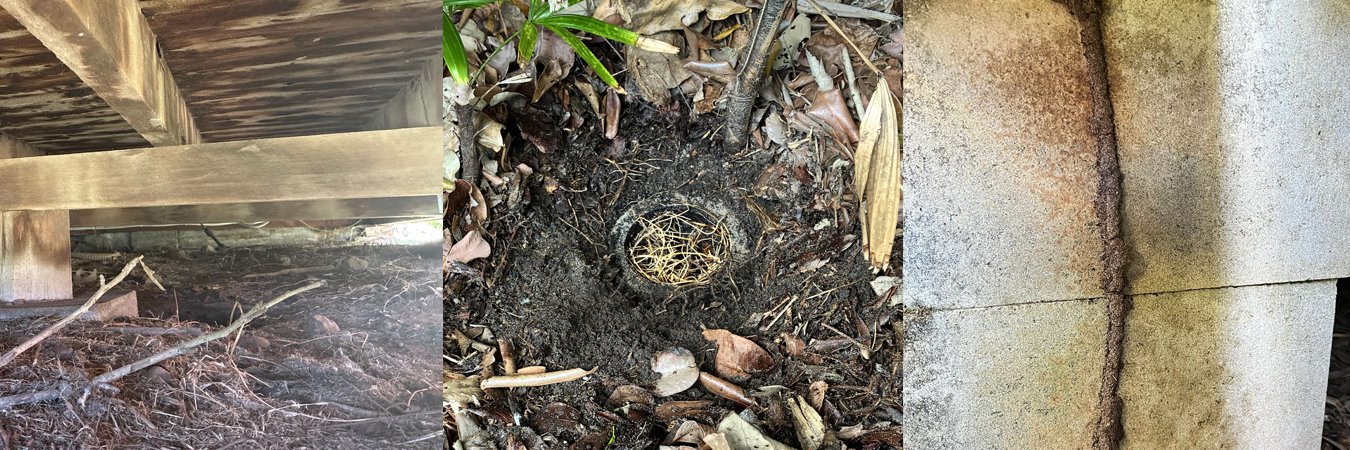
Finding termites inside your home can create an understandable sense of urgency.
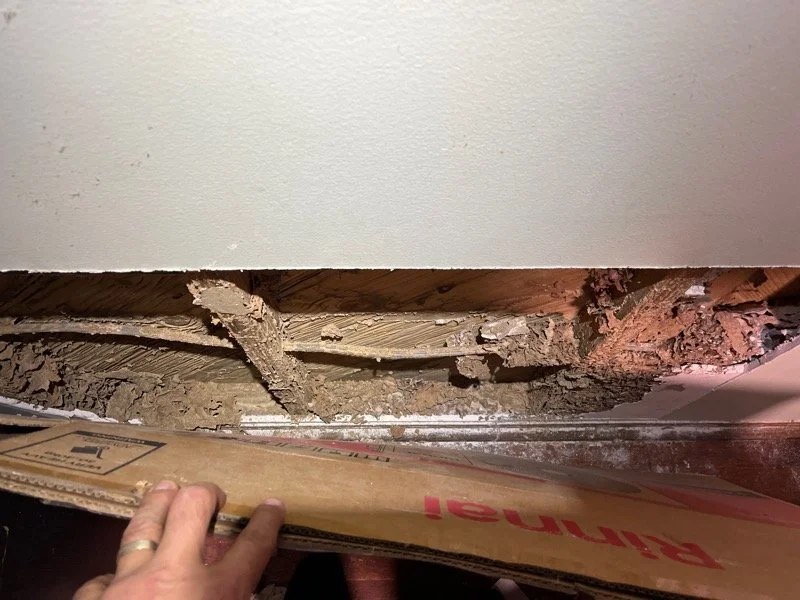
You pull away a piece of timber, move something stored against a wall or discover what looks like termite mudding around part of the building — and suddenly there are live termites in front of you.
The natural reaction is often:
Kill them.
You might reach for a can of insect spray, purchase a termite product from the hardware store, break open the affected timber
or start removing damaged material.
Unfortunately, when it comes to termites, taking immediate DIY action without first understanding the extent and nature of the
activity can make the situation harder to properly assess and manage.
The termites you can see may represent only a tiny part of a much larger termite system.
Killing those visible termites does not necessarily mean you have eliminated the source of the problem.
In some situations, disturbing termite activity can cause termites to retreat from that particular area. The homeowner may then believe the problem has disappeared when termite activity may still be present elsewhere in or around the structure.
That is why one of the most useful things you can do after discovering suspected live termite activity is surprisingly simple:
Don't disturb it unnecessarily.
Get it professionally assessed first.
Why Finding Termites Can Trigger the Wrong Reaction
Most household pests are dealt with in a fairly straightforward way.
You see a cockroach, spider or ant and your instinct is to remove or kill it.
Termites require a different mindset.
A professional termite technician isn't simply interested in killing the termites visible at the point of discovery. Those termites provide information.
Their location, activity, mudding and concealed pathways can help build a picture of how termites may be entering and moving through the property.
If that evidence is destroyed before an inspection takes place, some of that information may be lost.
This is why homeowners should resist the temptation to immediately spray, pull apart or clean up suspected termite activity.
The priority should be understanding the problem before choosing the treatment.
The Termites You See Are Only Part of the Problem
One of the biggest misunderstandings surrounding DIY termite treatment is assuming that the termites you can physically see are the infestation.
They aren't necessarily.
Subterranean termites live socially in colonies and travel between food sources and their colony environment through concealed pathways.
The termites feeding inside a piece of timber in your house may therefore represent only a small proportion of the termites associated with the activity.
This creates an obvious problem with surface-level DIY treatments.
You might kill the termites you can reach without addressing the wider termite activity.
It's a little like wiping up water from the floor without finding the leaking pipe.
The visible symptom has been dealt with.
The underlying problem may not have been.
Why Spraying Visible Termites May Not Solve the Infestation
A common response to finding termites is reaching for a household aerosol insecticide.
You spray the visible insects.
They die.
Problem solved?
Not necessarily.
Killing termites at the point where you've discovered them doesn't automatically eliminate the colony or address other concealed termite activity.
It can also disturb activity at a location that could otherwise have provided valuable information during an inspection.
Professional termite management takes a much broader approach.
The technician needs to consider questions such as:
Where has activity been detected?
How extensive does it appear to be?
Are there other areas of the building showing evidence?
What conditions around the property may be contributing to termite risk?
What treatment or management strategy is appropriate for the particular situation?
Simply spraying what you can see doesn't answer those questions.
And if the termites disappear afterwards, that should not automatically be interpreted as evidence that the termite problem has been eliminated.
Disturbing Termites Can Make Professional Assessment Harder
Termites generally prefer protected environments.
They commonly move through concealed areas rather than openly exposing themselves.
That means the signs they leave behind can be extremely important during an inspection.
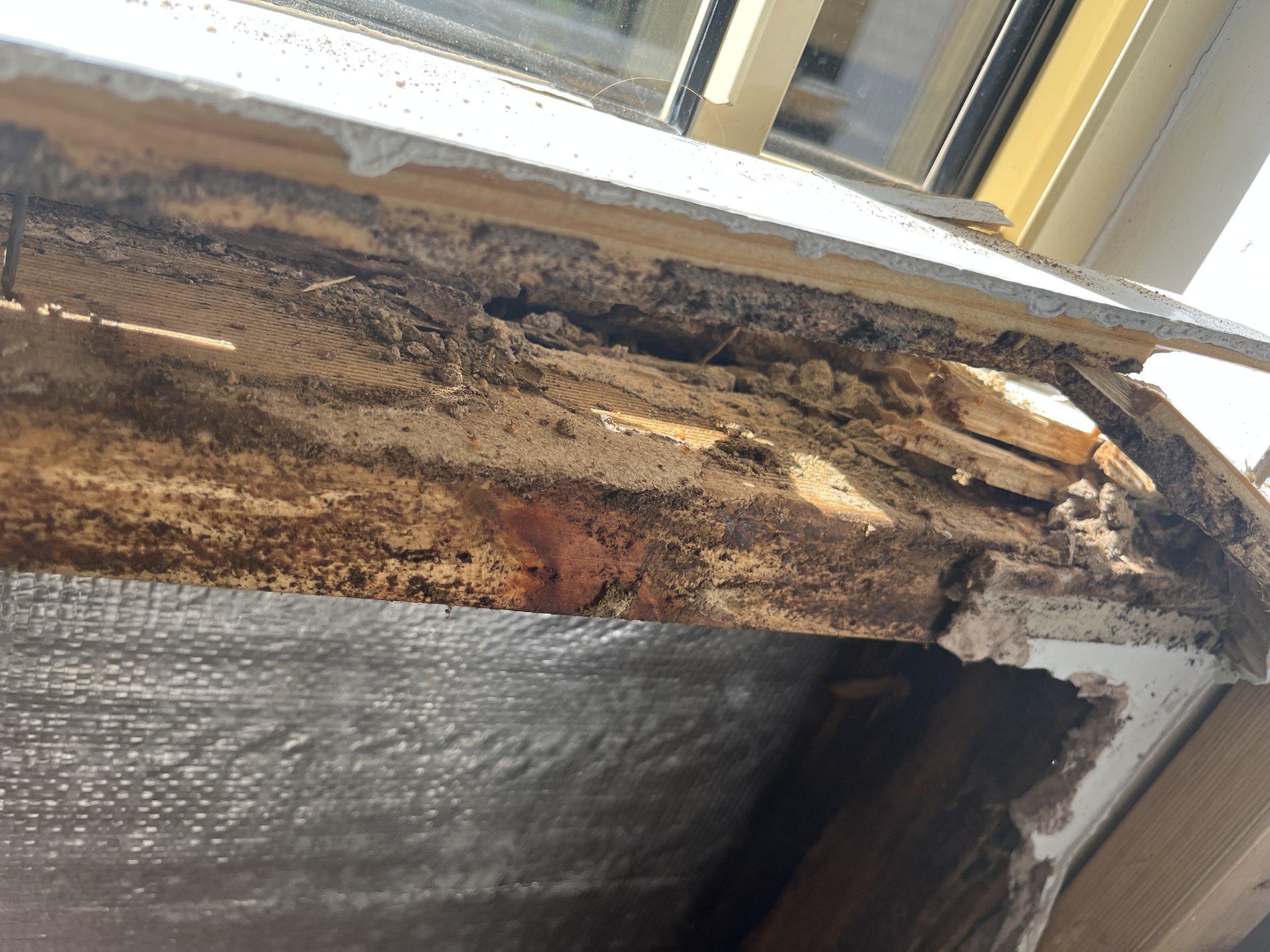
Opening termite workings, removing damaged timber, scraping away mudding, pulling apart wall materials or saturating an area with insecticide can alter what the technician finds when they arrive.
It doesn't make professional inspection impossible.
But it can make the original activity more difficult to assess.
If you accidentally expose termites while renovating, gardening or doing maintenance, try to minimise further disturbance.
Where practical, leave the area as you found it and contact a termite professional.
If you've already sprayed or disturbed them, don't panic or assume there's no point getting an inspection.
Tell the technician exactly what happened, where the termites were found and what product, if any, was applied.
That information can help.
Why the Termites Suddenly Disappearing Is Not Necessarily Good News
This is where DIY termite treatment can create false confidence.
You find termites.
You spray them.
A few days later there are no termites visible.
It feels like success.
But the absence of visible termites doesn't by itself prove the underlying termite problem has been resolved.
Termite activity is often concealed.
If the area has been disturbed, activity at that specific point may cease or become less obvious while termites remain elsewhere.
This can potentially create a dangerous period where the homeowner believes the problem has gone away and delays further investigation.
Meanwhile, there may still be concealed termite activity within the property.
When dealing with termites, "I can't see them anymore" and "the termite problem has been resolved" are two very different conclusions.
DIY Products and Professional Termite Management Are Not the Same Thing
There are termite and pest-control products legally available to householders in Australia.
That does not mean every termite infestation can be effectively managed using a retail product.
Different products have different approved uses, concentrations, application requirements and limitations.
The Australian Pesticides and Veterinary Medicines Authority (APVMA) requires domestic pest-control products to carry instructions covering correct use, preparation where applicable, precautions, safety directions and other limitations. The APVMA specifically advises pesticide users to read the label and use products only as directed. APVMA
Some chemical products are also restricted to authorised users. APVMA
Professional termite management isn't simply about having access to a stronger bottle of chemical.
The critical difference is the process around the treatment:
inspection → assessment → treatment selection → correct application → ongoing monitoring and management.
In NSW, commercial termite treatments fall within licensed pest-management work. The NSW EPA advises householders to
check that the pest controller they engage is appropriately licensed.
Why Correct Identification and Inspection Come First
Before deciding how termite activity should be managed, you need to understand what you're dealing with.
A thorough termite inspection is designed to look beyond the obvious point where termites were discovered.
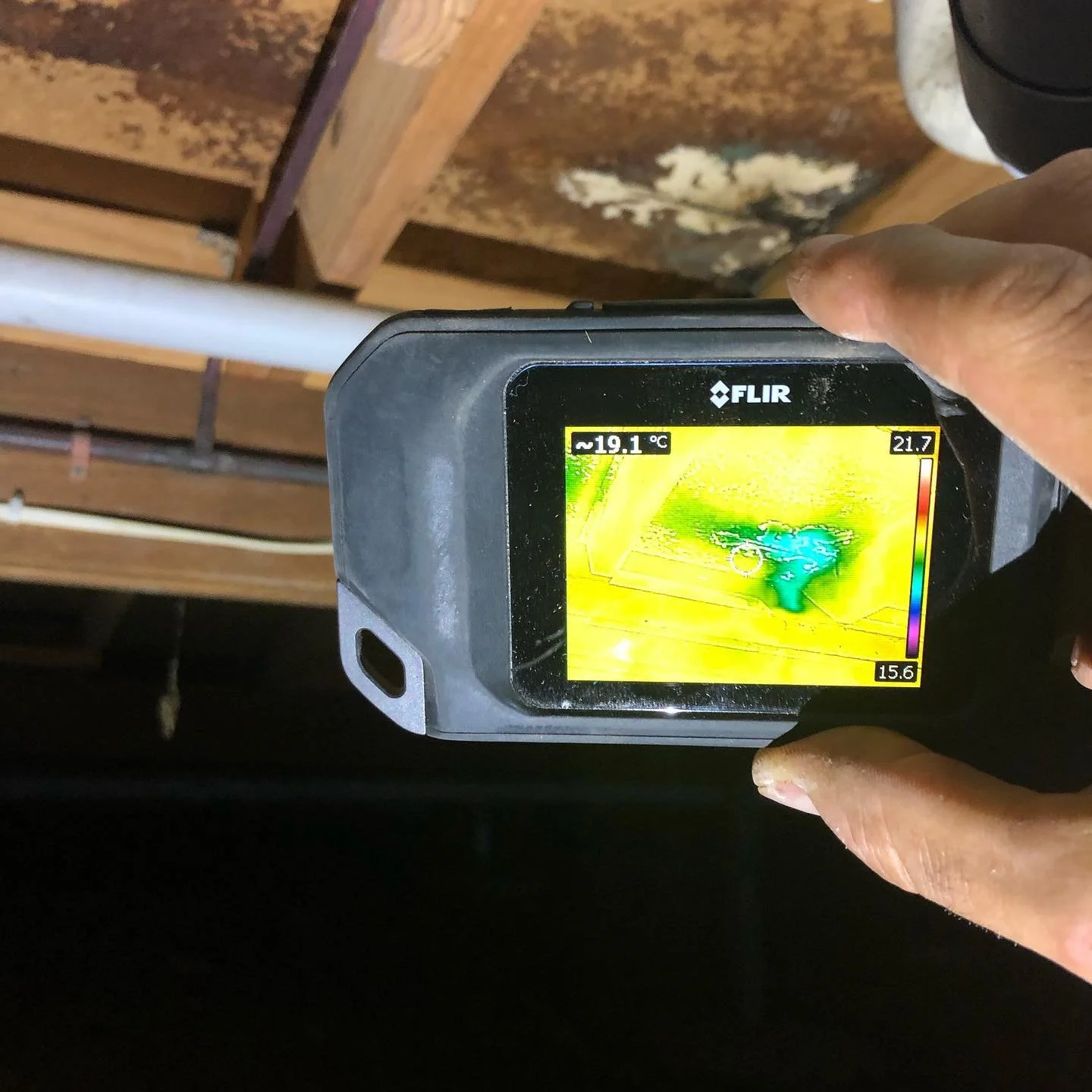
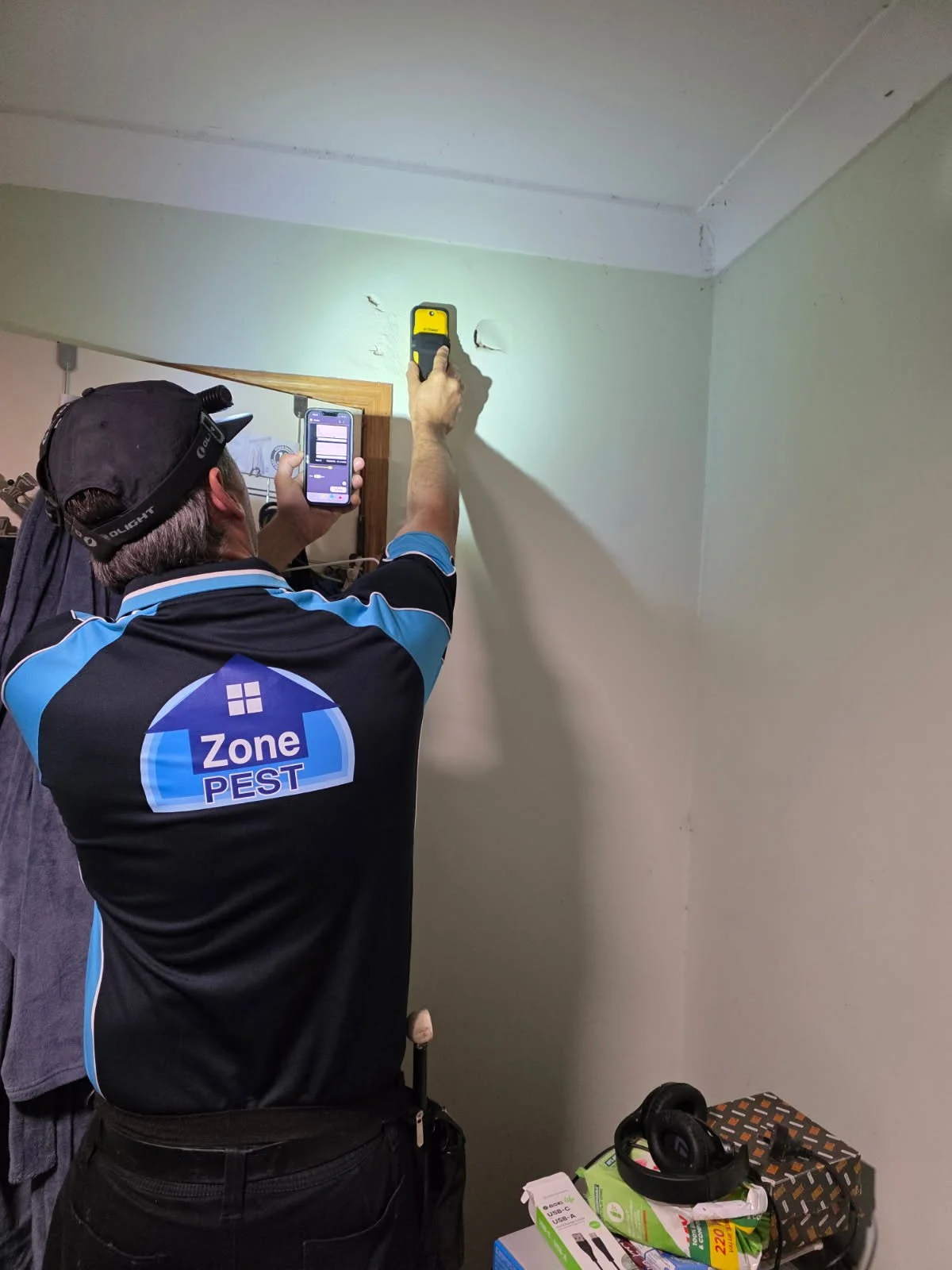
At Zone Pest, termite inspections can incorporate specialist detection equipment including thermal imaging and
Termatrac alongside a detailed physical inspection.
Technology is useful, but it doesn't replace technician experience.
The objective is to gather as much information as possible about the property and potential termite activity without unnecessarily disturbing the evidence.
That information can then help determine the appropriate next step.
Depending on the circumstances, termite management may involve direct treatment of activity, chemical management systems, termite baiting or monitoring systems, or another property-specific strategy.
There isn't one DIY can that substitutes for this process.
If you discover what appears to be live termites inside or around your home, your next few actions matter.
Ideally:
Stop disturbing the area.
Don't keep pulling the timber apart simply to see how far the termites go.
Don't automatically spray them.
Killing visible termites isn't the same as resolving the wider termite problem.
Don't remove all the evidence.
Leave mudding, damaged material and the affected area intact where practical until it can be inspected.
Take photographs if you can do so without further disturbance.
Photographs can be useful, particularly if activity changes before the technician arrives.
Arrange a professional termite inspection promptly.
The sooner the activity is properly assessed, the sooner an appropriate management strategy can be considered.
If you've already disturbed or sprayed the area, tell your technician what you've done.
What You Should Do If You Find Live Termites
There is no single treatment that is automatically correct for every termite problem.
A professional approach starts with inspection.
Once the activity and property conditions have been assessed, a termite management strategy can be developed
around the specific circumstances of the building.
That might involve treating active termites first and then considering longer-term protection.
Depending on the property, longer-term termite management options can include chemical-treated zones or termite monitoring and baiting systems.
The objective isn't simply:
"How do we kill the termites standing in front of us?"
A better question is:
"How do we manage the termite activity affecting this property and reduce the ongoing risk?"
That's a fundamentally different approach.
How Professional Termite Treatment Works
Termite Risk in the Northern Rivers and Tweed Coast
Termites are an important property-management issue for homeowners throughout the Northern Rivers, Tweed Coast and surrounding regions.
Local conditions can provide plenty of opportunities for termite activity around residential properties.
Moisture, landscaping, timber around buildings, drainage issues, stored materials, garden structures and concealed entry points can all become relevant when assessing a property's termite risk.
This is one reason Zone Pest takes a property-specific approach.
A home in Tweed Heads may present different inspection challenges from an acreage property around Murwillumbah or a coastal home around Pottsville, Kingscliff or Casuarina.
Understanding the building and its surrounding environment matters.
The treatment isn't just about the insect.
It's about the property.
Killing the termites you can see does not necessarily eliminate the colony or wider termite activity.
Spraying or disturbing live termites can alter activity at the discovery point and make the original evidence harder to assess.
Termites disappearing after DIY treatment does not prove the infestation has been resolved.
Avoid pulling apart damaged timber, mudding or termite workings before an inspection where practical.
DIY termite products must always be used strictly according to their approved label directions. APVMA
Professional termite management begins with inspection and assessment rather than simply spraying visible insects.
Different properties and termite situations may require different management approaches.
If you have already sprayed or disturbed termites, tell the technician exactly what you did and where.
Professional commercial termite treatment in NSW is licensed pest-management work. Service NSW
If you find suspected live termites, minimise disturbance and arrange professional assessment promptly.
Zone Pest - Key Takeaways
-
The biggest problem with DIY termite treatment is not simply whether a product can kill a termite. Many insecticides can kill insects they directly contact.
The more important question is whether the treatment is appropriate for the termite activity affecting your property.
The termites visible inside damaged timber may represent only a small part of the overall activity. Termites can be travelling through concealed areas of the building or between the structure and their wider colony environment.
A surface treatment may therefore kill termites at one location without addressing the underlying problem.
There is also a risk of disturbing useful evidence before the property has been inspected.
Professional termite management begins by assessing the property, the signs of activity, potential entry points and surrounding conditions before deciding what treatment strategy is appropriate.
If you use any domestic pesticide product yourself, it should only be used according to its approved label directions. The APVMA advises users to always read pesticide labels and use products only as directed.
-
Finding live termites can be alarming, but immediately pulling apart the area or spraying the insects may remove useful evidence.
If possible, stop what you're doing and leave the affected area intact.
Avoid breaking open additional timber or termite workings simply to determine how extensive the activity appears to be. Termite activity can extend well beyond the area visible to the homeowner, so opening more material does not necessarily reveal the true extent of the problem.
You can take photographs if this can be done without disturbing the termites.
Then contact a qualified termite professional and explain exactly where the activity was discovered.
A termite inspection can assess the immediate area as well as other accessible parts of the property for evidence of termite activity, conducive conditions and potential entry points.
If you've already disturbed or sprayed the termites, still arrange an inspection. Tell the technician what happened and what product was used.
-
Spraying visible termites can feel like the obvious response because it produces an immediate result.
The termites die or disappear.
Unfortunately, that immediate result can be misleading.
The termites visible at the point of discovery may be only a small part of the overall termite activity. Killing them doesn't necessarily affect termites elsewhere within the structure or associated colony.
Disturbing the area may also alter the termite activity that a technician could otherwise examine during an inspection.
The better approach is usually to preserve the area and arrange professional assessment.
If you have already sprayed the termites, don't assume you've ruined your chances of successful treatment. Simply explain to your technician where the termites were found, approximately when you discovered them and what you applied.
That information becomes part of the assessment.
-
This is one of the most dangerous assumptions homeowners can make after attempting DIY termite control.
You discover termites, apply an insecticide and later return to find no live termites.
It's easy to conclude that the treatment worked.
But termites spend much of their time concealed from view. The fact that they are no longer visible at one location doesn't establish what is happening elsewhere in the structure or colony.
Activity may have changed after the area was disturbed.
The risk is that the homeowner now delays obtaining a professional inspection because the visible symptom has disappeared.
That delay can allow an unresolved problem to remain unnoticed.
A professional termite assessment isn't based solely on whether live termites are visible at the exact moment of inspection. Technicians look for a broader range of evidence and conditions around the property.
When dealing with termites, absence of visible activity should never automatically be interpreted as proof of elimination.
-
Termites generally operate within protected and concealed environments.
When their workings are opened or heavily disturbed, the activity visible at that particular location may change.
From the homeowner's perspective, this can look as though the termites have simply vanished.
The important distinction is between movement away from a disturbed point and successful management of the underlying termite problem.
They are not the same thing.
This is why termite technicians generally want to see suspected activity with as little prior disturbance as possible.
The location of termites, their workings and other evidence around the affected area can help with assessment.
If you've accidentally exposed termites while renovating or repairing something, stop disturbing the area where practical and arrange an inspection.
You don't need to start dismantling the building to work out where they went.
-
A termite colony can contain far more termites than the small number a homeowner happens to expose inside a piece of timber or wall area.
The visible termites are workers or other colony members operating away from the central colony environment.
This means direct killing at the discovery point can address the termites immediately exposed without necessarily addressing the source of the activity.
Effective termite management therefore requires more than simply counting how many termites died after treatment.
A professional needs to consider the location and extent of activity, building construction, environmental conditions and the treatment strategy most appropriate to the situation.
Depending on the circumstances, this could involve a targeted treatment of active termites followed by a longer-term termite management strategy.
The goal should be management of the termite problem affecting the property — not simply killing the insects that happened to be visible.
-
The difference goes far beyond the product itself.
Domestic pest-control products available in Australia must have approved directions describing how and where they can be used, along with relevant precautions and safety information. They must only be used according to those directions. APVMA
Some chemical products are restricted to authorised users. APVMA
Professional termite management also involves trained assessment, treatment selection and application.
A technician first needs to understand the property and termite activity before recommending an appropriate strategy.
That could potentially involve direct treatment, a chemical management system, monitoring and baiting or a combination of approaches depending on the circumstances.
So the difference isn't simply:
hardware-store chemical versus professional chemical.
It's the inspection, knowledge, application methodology, treatment design and ongoing management surrounding the product.
-
Homeowners regularly react immediately when they discover termites.
If you've already sprayed them or opened the affected timber, there's no benefit in feeling that you've missed your chance to have the problem professionally assessed.
The important thing now is to avoid further unnecessary disturbance and provide as much information as possible.
Tell the technician:
where you originally saw the termites;
when you discovered them;
what you moved or opened;
whether you removed any damaged material;
what product you sprayed or applied;
approximately how much was used;
whether you've noticed activity anywhere else.
If possible, keep photographs taken before or during the discovery.
The technician can then inspect the property using the remaining evidence and the information you've provided.
Most importantly, don't assume that because the termites have disappeared following your DIY treatment there is no longer a reason to investigate.
-
Termites are not a pest problem that should be ignored for weeks or months while you wait to see what happens.
At the same time, acting promptly does not mean you need to start spraying, demolishing or pulling the affected area apart.
Your immediate priority should be preserving the area and arranging professional assessment.
The technician can then inspect the activity and determine what further investigation or management is appropriate.
Prompt assessment is particularly important because visible termite activity may not represent the full extent of the problem.
The earlier you understand what you're dealing with, the earlier an appropriate termite-management strategy can be considered.
For homeowners throughout the Northern Rivers and Tweed Coast, Zone Pest can assess suspected termite activity and provide recommendations based on the property and findings.
At Zone Pest, we specialize in identifying and mitigating termite & pest risks. Our experienced team conducts thorough inspections and provides tailored solutions to protect your property. Contact us today to schedule an inspection and ensure your
home remains termite-free & pest-free.
Remember, Australian Standards recommend having a licensed and insured pest manager inspect your property at least
once a year to maintain optimal protection against termites & other pests.
Written by Matt — Licensed Pest Technician, Zone Pest. Proudly protecting homes across the Northern Rivers region for over a decade.
Need Advice About Protecting Your Property?
Whether you've noticed signs of termite activity, need a routine inspection or simply want professional advice, Zone Pest is here to help.
We take the time to explain our findings, answer your questions and recommend solutions that suit your property's individual needs,
without unnecessary pressure or confusing technical language.
If you're ready to arrange an inspection or would like to discuss the best approach for protecting your home or business, contact Zone Pest today.