

Termite Treatment Frequently Asked Questions
Understanding Professional Termite Treatments
Discovering termites around your home can be an unsettling experience. Whether you've found mud tubes on a wall, damaged timber, discarded wings or you've simply received an inspection report confirming termite activity, one question quickly follows:
"What happens now?"
The answer is not always as simple as applying a chemical treatment or installing a bait station. Every property is different, every termite colony behaves differently and every treatment plan should be tailored to the specific circumstances of your home.
One of the biggest misconceptions about termite management is that there is a single "best" treatment for every situation. In reality, professional termite management is about selecting the right strategy based on the location of the activity, the construction of the building, environmental conditions, the level of infestation and the long-term goals of the property owner.
At Zone Pest, we believe successful termite management begins with understanding the problem before choosing the solution.
That's why every treatment recommendation starts with a thorough assessment of your property.
Our role isn't simply to eliminate termites. It's to understand how they're accessing your property, why they're there,
what conditions allowed them to establish themselves and how we can reduce the likelihood of future activity.
Zone Pest Termite Treatments Frequently Asked Questions
-
A professional termite treatment is much more than simply spraying chemicals around your home.
Its purpose is to manage active termite activity, reduce the risk of further structural damage and form part of a long-term termite management strategy.
Different properties require different treatment methods. Depending on your situation, treatment may involve directly treating active termites, installing a termite baiting system, creating a chemical management zone around the building or combining multiple techniques to achieve the best long-term outcome.
Before recommending any treatment, it's important to understand where termites are active, how they are entering the property and what environmental conditions have contributed to the infestation.
At Zone Pest, every treatment recommendation is tailored to the individual property rather than applying the same solution to every situation.
-
Termites work continuously, often remaining hidden inside walls, roof voids and subfloors while feeding on structural timber.
Once active termites have been identified, delaying treatment gives the colony additional time to continue causing damage.
The appropriate treatment will depend on factors such as the size and location of the infestation, your property's construction and the most effective long-term management strategy.
Even if the visible termite activity appears small, there may be a much larger colony nearby that also needs to be considered during treatment planning.
Early professional intervention provides the best opportunity to minimise damage and protect your property.
-
One of the most common misconceptions is that termites will eventually leave by themselves.
In reality, termites are continually searching for food and moisture. If they have found suitable timber within your property, they have little reason to leave voluntarily.
Ignoring termite activity almost always allows the infestation to continue, increasing the likelihood of structural damage over time.
Professional treatment is designed to manage the termite activity appropriately while also identifying why the termites were attracted to the property in the first place.
Acting early is almost always less expensive than repairing extensive termite damage later.
-
Professional termite treatments are based on understanding termite biology, building construction and the way termite colonies behave.
Rather than simply treating the visible termites, professional pest managers assess how termites are entering the building, identify conducive conditions and recommend the most appropriate management strategy for the property.
Professional treatments also use specialised products and equipment that are not available through standard retail outlets and are applied in accordance with Australian Standards and manufacturer guidelines.
Combined with ongoing inspections, professional treatment provides significantly greater confidence that termite activity has been managed appropriately.
-
DIY termite treatments are generally not recommended. Treating visible termites without understanding the colony's location or the extent of the infestation may make the problem more difficult to manage and delay effective treatment.
While hardware stores sell various termite products, successfully managing an active infestation requires far more than simply applying a chemical.Termites often remain hidden deep within walls, beneath slabs or underground. Treating only the visible termites may not affect the larger colony and, in some situations, may even cause termites to relocate to another part of the building, making detection more difficult.
Professional termite management begins with accurately identifying the extent of the activity before selecting the most appropriate treatment method.
If you suspect termite activity, avoid disturbing the area and arrange a professional inspection as soon as possible.
-
Termites do not stop feeding because they have been discovered.
Every day that treatment is delayed provides additional time for termites to continue damaging structural timber within the property.
While every situation is different, active termite infestations should be professionally assessed and treated without unnecessary delay.
Quick action not only helps reduce damage but also allows the most appropriate treatment strategy to be implemented before the infestation becomes more extensive.
If you suspect termites, contacting a qualified termite specialist promptly is always the best course of action.
-
No. Every termite infestation is different. The most effective treatment depends on the termite species, the location of the activity, your property's construction and the overall level of termite risk.
There is no universal termite treatment that suits every property.Some situations are best managed using chemical treatments, while others may benefit from termite baiting systems or a combination of treatment methods.
The property's construction, accessibility, surrounding environment and long-term protection requirements all influence which approach is recommended.
At Zone Pest, treatment recommendations are always tailored to the individual property after a thorough professional assessment.
Our focus is on selecting the treatment strategy that provides the best long-term outcome rather than applying the same solution to every infestation.
-
Termites rarely stop feeding until something interrupts their activity.
Because they often remain hidden inside structural timbers, homeowners may not realise how much damage is occurring until repairs become extensive.
The longer an active infestation remains untreated, the greater the likelihood that additional areas of the property will be affected.
Professional treatment aims to manage the infestation before further structural damage occurs while also identifying and reducing the conditions that allowed termites to establish themselves.
Prompt action is one of the most effective ways to protect your property and minimise future repair costs.
-
Professional termite treatments are designed to be applied according to registered product directions and relevant safety requirements. The precautions required depend on the product, treatment method and areas being treated.
Safety is an important consideration when planning any termite treatment.Professional termite management products have specific registered uses, application methods and safety directions that must be followed by the technician.
The precautions required vary depending on the treatment. A soil treatment around the external perimeter of a home, for example, has different considerations from treatment within an internal area or the installation of termite bait stations.
Before work begins, Zone Pest will explain any precautions relevant to your treatment, including whether particular areas need to remain temporarily inaccessible.
Correct product selection, professional application and following the required directions are all important parts of responsible termite management.
-
Gardens often sit directly alongside the areas where termite protection needs to be established, so landscaping forms part of the treatment assessment.
The impact on vegetation depends on the treatment method, product and access required.
In some situations, garden beds, mulch or soil may need to be temporarily moved or adjusted to provide access to foundations and treatment zones.
Bait stations may also be positioned within landscaped areas around the building.
Our objective is to achieve the required termite management outcome while avoiding unnecessary disturbance to established landscaping wherever practical.
We'll discuss any areas of concern with you before work proceeds.
-
There isn't a meaningful single price for termite treatment because the work required can differ substantially between properties.
Factors influencing cost include:
Extent and location of termite activity
Size of the building
Construction type
Accessibility
Treatment method
Amount of drilling or soil treatment required
Number of bait stations
Existing termite management systems
Ongoing monitoring requirements
A localised treatment will naturally involve a different level of work from establishing a comprehensive termite management system around an entire property.
The most important comparison isn't simply the initial price. It's understanding what is included, what the treatment is designed to achieve and what ongoing maintenance will be required.
Zone Pest will explain the recommended treatment and associated costs before work proceeds.
-
Many homeowners are surprised to discover that termite damage is commonly treated as a preventable maintenance issue rather than a sudden insured event.
As a result, standard home insurance policies may exclude both termite damage and the cost of termite treatment.
However, insurance policies and circumstances differ, so you should never assume whether you are or aren't covered based on general advice.
Check the Product Disclosure Statement for your policy or contact your insurer directly for confirmation.
Regardless of insurance coverage, regular professional inspections remain one of the most practical ways to reduce the risk of significant termite damage developing unnoticed.
-
It's important to distinguish between a warranty associated with a particular treatment and a promise that termites can never return.
Termites remain naturally active throughout the surrounding environment. Even after an infestation has been successfully managed, another colony may approach the property in the future.
Some termite management systems may include specific warranties or service conditions, but these can depend on regular inspections, ongoing servicing and maintaining the treated areas.
Before treatment begins, Zone Pest will explain any applicable warranty conditions and what you need to do to maintain them.
Be cautious of broad claims suggesting that a single treatment can permanently guarantee a termite-free property.
Choosing the Right Termite Treatment Frequently Asked Questions
-
The most suitable termite treatment depends on several factors, including the location of the termite activity, your property's construction, environmental conditions and your long-term protection goals. Every recommendation is tailored to your individual property.
Choosing the right termite treatment isn't simply about selecting a product, it's about understanding the complete termite situation.Before recommending any treatment, we assess where termites are active, how they're entering the property, the construction of the building, surrounding environmental conditions and whether long-term protection is also required.
Some properties are better suited to chemical treatments, while others may benefit from baiting systems or a combination of treatment methods.
At Zone Pest, we take the time to explain why a particular treatment has been recommended so you can make an informed decision with confidence.
-
Every property presents its own unique challenges.
When developing a treatment strategy, we consider factors such as:
Construction type
Slab or raised flooring
Accessibility beneath and around the building
Location of active termites
Moisture issues
Existing termite protection
Previous termite treatments
Landscaping
Nearby bushland
Future monitoring requirements
These factors help determine which treatment method will provide the most effective and practical long-term outcome.
Rather than applying the same solution to every property, we tailor our recommendations to suit your individual circumstances.
-
Homeowners often ask which termite treatment is "the best."
The reality is that the best treatment is the one that suits your property's specific circumstances.
For example, a modern concrete slab home may require a different management strategy to an older timber home on stumps or a rural acreage surrounded by bushland.
The location of active termites, the ability to access treatment areas and your long-term protection goals all influence the recommendation.
Professional termite management is about selecting the right solution rather than applying a standard treatment to every property.
-
Yes. In some situations, combining treatment methods provides the most effective long-term outcome. The appropriate combination depends on your property's individual circumstances.
Professional termite management isn't always limited to a single treatment.Some properties benefit from combining direct treatment of active termites with a chemical management zone or ongoing termite baiting program.
Using multiple strategies may improve both immediate termite control and long-term property protection.
Following your inspection, we'll explain whether a combined approach offers additional benefits for your particular property and why that recommendation has been made.
-
Yes. Previous treatments may influence the most appropriate management strategy. Existing termite barriers, baiting systems or earlier treatments are all considered when planning future termite management.
Understanding a property's treatment history is an important part of developing an effective termite management plan.During our assessment, we'll consider whether chemical treatments have previously been installed, whether termite bait stations are already in place and whether any previous termite activity has been recorded.
This information helps determine whether existing protection remains effective, requires maintenance or should be supplemented with another treatment method.
Every recommendation is based on your property's current condition as well as its treatment history.
-
Yes. Older homes and newer homes often present different construction features that influence the most appropriate termite management strategy.
Construction methods have changed considerably over time.Older homes may include raised timber floors, subfloors, original foundations and previous renovations that affect how termite treatments are applied.
Newer homes may already incorporate termite management systems that require inspection, maintenance or integration with future treatments.
Rather than recommending treatments based solely on a property's age, we assess how its construction influences termite access and long-term protection requirements.
-
Yes. Construction type is one of the most important factors when selecting an appropriate termite treatment. Slab homes, raised homes, extensions and renovations may all require different approaches.
No two homes are built exactly the same.Concrete slabs, suspended timber floors, split-level homes, retaining walls and extensions all present different opportunities for termite entry.
The way a building has been constructed influences where termites can gain access, how treatments are applied and what level of ongoing monitoring may be required.
Professional termite management considers the entire building—not just the location where termites have been discovered.
This allows us to recommend a treatment strategy that provides the best protection for your property's unique construction.
-
Yes. Landscaping, drainage, surrounding vegetation, retaining walls, garden beds and nearby bushland all influence termite risk and may affect the most appropriate treatment strategy.
The environment surrounding your home plays an important role in termite management.Dense vegetation, timber retaining walls, irrigation systems, poor drainage and nearby bushland can all contribute to increased termite activity around a property.
These environmental factors are considered alongside the construction of your home when developing a treatment recommendation.
In many cases, improving landscaping or reducing conducive conditions forms an important part of the overall termite management strategy alongside professional treatment.
Our recommendations focus not only on managing current termite activity but also on reducing the likelihood of future infestations.
-
No. Removing termite-damaged timber doesn't necessarily eliminate the termite colony. Active termites may remain elsewhere within the building or surrounding soil and should be professionally assessed before repairs begin.
Termite damage and termite activity are two separate issues.Removing damaged timber may eventually be necessary as part of repairing the property, but doing so doesn't automatically solve the termite infestation.
The colony responsible for the damage may still be active within other timbers, beneath the building or in the surrounding environment.
In many cases, it's preferable to assess and manage active termites before extensive damaged timber is removed, because disturbing the area can alter termite behaviour.
Once termite activity has been appropriately managed, building professionals can assess the extent of repairs required.
This is why termite treatment and structural repair should be viewed as separate stages of the recovery process.
-
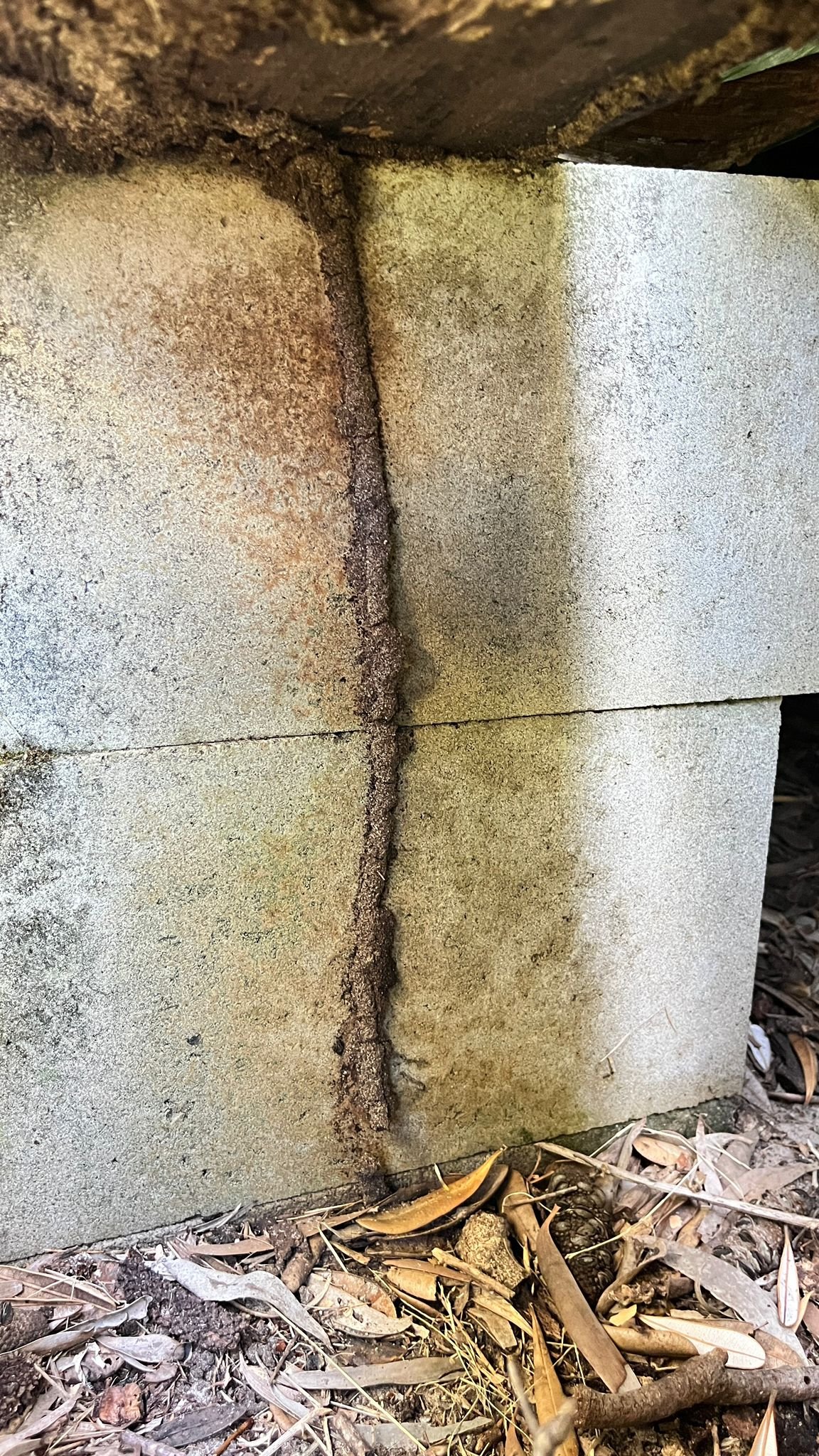
Spraying visible termites may kill the termites you can see but does little to address the colony and can disturb their activity. If you discover termites, leave the area intact and arrange a professional inspection.
Finding live termites naturally creates an urge to spray them immediately.Unfortunately, killing the small number of termites you can see doesn't solve the underlying infestation.
The termites inside your home may represent only a tiny fraction of a much larger colony located elsewhere.
Disturbing or spraying the area can cause termites to retreat from that location, potentially making it more difficult for a professional to assess their activity and determine the most appropriate treatment.
If you uncover suspected termites, avoid breaking open additional timber or applying household insecticide.
Where practical, cover the disturbed area and contact a termite professional for advice.
Preserving the activity can provide useful information during the inspection and treatment process.
Chemical Termite Treatment Frequently Asked Questions
-
Chemical termite treatments are one of the most established methods used in professional termite management.
Depending on the situation, a termiticide may be applied directly to areas of active termite activity or used to create a treated zone in the soil around and beneath parts of the building.
The objective is not simply to kill termites that are visible. A professionally designed treatment aims to interrupt termite movement and help manage the broader infestation while reducing the likelihood of concealed entry into the property.
The treatment method, product and application points will depend on the building's construction, accessibility and the findings of the termite inspection.
At Zone Pest, chemical treatments are recommended where they provide an appropriate and practical solution for the individual property.
-
Some modern professional termiticides are described as non-repellent because termites generally do not recognise the treated area as something they need to avoid.
This can be valuable in termite management because termites may continue moving through treated soil or materials rather than simply finding another untreated pathway around the treatment.
Depending on the product, exposed termites may also transfer active ingredient through interaction with other termites, helping extend the effect beyond the initial contact area.
This is one reason professional product selection and correct application are so important. The effectiveness of a treatment depends not just on the chemical itself, but on creating the appropriate treated zones and understanding how termites are moving through the property.
-
Termidor is a widely used professional termiticide containing fipronil and has been used extensively in termite management.
Depending on the circumstances, it may be used as part of a localised termite treatment or to establish a treated zone around parts of a building to help manage termite entry.
One of the characteristics of Termidor is that it is non-repellent, meaning termites generally do not simply detect the treated area and avoid it.
However, the product itself is only one part of a successful treatment. Correct application, understanding the building construction and identifying termite entry pathways are equally important.
At Zone Pest, products such as Termidor are used where they are appropriate for the property's individual termite management requirements rather than as an automatic solution for every situation.
-
The term "chemical barrier" is commonly used to describe a treated soil zone created around a building using a professional termiticide.
Rather than forming a physical wall that termites cannot cross, the treatment creates a managed zone through which termites must travel if they attempt to enter the building from the soil.
Depending on the property, this may involve treating soil around external foundations, beneath concrete edges, around service penetrations or other potential termite entry points.
The design of the treatment depends heavily on the construction of the home and the ability to establish a continuous and effective treated zone.
Chemical barriers can provide valuable long-term protection, but they still need to be supported by regular professional inspections and good property maintenance.
-
Drilling may be required where concrete, paving or other building elements prevent direct access to the soil that needs to be treated. Small treatment holes allow the termiticide to be applied to the appropriate areas beneath the surface.
-
Chemical termite protection is not limited to new buildings.
Existing homes can often have a treated zone installed around the perimeter and other areas where termites may gain concealed access.
The treatment process will vary depending on whether the home is built on a concrete slab, raised foundations or another construction type, as well as whether paths, decks, paving or landscaping restrict access.
In some areas, soil can be treated directly. In others, drilling or alternative application techniques may be required.
Before recommending a system, Zone Pest assesses the property carefully to determine whether an effective treatment zone can be established and what preparation may be necessary.
-
Chemical termite treatments are designed to provide ongoing protection, but they do not last forever.
How long a treated zone remains effective depends on several factors, including the product used, how it was applied, soil conditions, rainfall, construction changes and whether the treated area is later disturbed.
Renovations, landscaping, excavation or new service installations can potentially affect an existing treatment zone.
For this reason, the expected protection period and any maintenance requirements should always be explained when the system is installed.
Even while a chemical management system remains within its expected service life, regular termite inspections continue to be important. No treatment removes the need to monitor the property over time.
-
A chemical treatment relies on maintaining the treated areas around the building.
If soil is excavated, removed or replaced after treatment, part of the management zone may be disrupted. Similar issues can arise when new plumbing, electrical services, extensions, paths or landscaping are installed.
This doesn't necessarily mean the entire system has failed, but the disturbed area may need to be professionally assessed and reinstated.
If you're planning renovations or significant landscaping around a property with existing termite protection, it's worth speaking with your pest management professional beforehand.
A small amount of planning can help preserve the effectiveness of the existing system and avoid accidentally creating new termite entry opportunities.
-
A chemical termite management system can significantly reduce termite risk, but no system should be viewed as a permanent guarantee.
Termites remain active within the surrounding environment, and changes to the property can affect how protection performs over time.
Regular inspections allow us to check for evidence of new termite activity, assess any changes to treated areas and identify new conducive conditions such as moisture problems, landscaping changes or building alterations.
The strongest long-term termite management strategy combines professional protection systems with ongoing inspection and sensible property maintenance.
Think of the chemical treatment as one layer of defence rather than the entire solution.
Termite Baiting Systems Frequently Asked Questions
-
A termite baiting system provides a different approach to termite management than creating a chemical treated zone around a building.
Stations are strategically installed around the property where they can be regularly monitored for termite activity. When termites begin feeding within a station, an appropriate termite bait can be introduced or activated depending on the system being used.
The termites feed on the bait and interact with other members of the colony, allowing the treatment effect to extend beyond the individual termites found in the station.
An important distinction is that baiting is a managed system, not simply a collection of stations in the ground. Its effectiveness relies on correct installation, regular monitoring and appropriate action when termite activity is detected.
-
Termite bait stations are positioned around a property and monitored for termite activity. When termites encounter the system and feed on the bait, the active ingredient is designed to work gradually so its effects can spread through the colony.
Termite baiting takes advantage of the natural feeding and social behaviour of termites.Worker termites continually forage for new food sources. When they encounter an installed station, they can begin feeding on the material within it.
With an active bait system, termites consume bait containing an active ingredient designed to act slowly enough for affected termites to continue interacting with other members of the colony.
Through feeding and social behaviour within the colony, the effect can spread beyond the termites initially found in the station.
Because termite colonies and foraging patterns differ from property to property, baiting requires professional monitoring rather than expecting termites to immediately locate every station.
-
Trelona is one of the professional termite baiting systems that may be used as part of a termite management strategy.
Stations are installed strategically around the property and inspected as part of an ongoing monitoring program.
The system uses bait containing an active ingredient that interferes with the termite moulting process. Because the effect isn't immediate, termites can continue feeding and interacting within the colony before they are affected.
This delayed action is an important part of the baiting strategy because the objective is not simply to kill individual termites visiting a station. The goal is to affect termite activity at the colony level.
Whether Trelona is appropriate depends on the property's construction, environment, termite activity and long-term management requirements.
-
Termite baiting systems are designed to affect termite colonies rather than simply kill individual termites. Successful colony management depends on termites finding and feeding on the bait and the system being professionally monitored and maintained.
One of the major advantages of professional termite baiting is its ability to use the termites' own behaviour to spread the treatment effect through the colony.When worker termites consume bait, they continue interacting with other termites. The slow-acting nature of the treatment allows its effect to extend beyond the individual termites initially feeding at the station.
Over time, this can substantially reduce and potentially eliminate the colony being targeted.
However, termite management should never rely on assumptions. The system needs to be regularly checked so activity can be assessed and the treatment strategy adjusted where necessary.
Even after colony elimination is achieved, stations can continue to play an important monitoring role because new termite colonies may enter the property in the future.
-
Termite baiting is deliberately gradual rather than immediate. The timeframe can vary depending on the colony, termite activity, environmental conditions and how quickly termites begin feeding on the bait.
Baiting systems are designed to work differently from products intended to kill termites immediately on contact.The active ingredient generally needs time to move through the colony via feeding and termite interaction. This gradual action is part of what allows baiting to affect more than the termites initially encountered.
How quickly this happens varies considerably.
Factors can include the size and location of the colony, the level of termite activity, seasonal conditions, available natural food sources and how quickly termites locate and feed from the system.
For this reason, it is better to think of baiting as a professionally managed process rather than expecting a fixed number of days for colony elimination.
Regular monitoring allows the technician to assess progress and determine whether the system is working as intended.
-
Bait stations need to be checked on a regular schedule determined by the system being used, termite activity and the property's individual risk. Active stations may require closer monitoring than stations being used primarily for ongoing surveillance.
Regular monitoring is one of the most important components of a professional termite baiting program.The appropriate inspection interval depends on factors such as the baiting system, whether termites are currently active, manufacturer requirements and the property's overall termite risk.
When termite activity is being managed, stations may need to be inspected more closely so feeding activity and treatment progress can be assessed.
Once the immediate activity has been resolved, the system can continue to be monitored as part of an ongoing termite management program.
Simply placing stations around a home and leaving them unattended defeats much of their purpose.
-
Yes. Professional baiting systems require ongoing inspection and maintenance to check for termite activity, assess the condition of stations and ensure the system continues to perform as intended.
A termite baiting system should never be treated as a set-and-forget installation.Stations are exposed to soil, moisture, weather, landscaping activity and other environmental conditions. They also need to be inspected for evidence of termite feeding and changes in activity.
During scheduled monitoring visits, the technician can check station condition, assess termite activity, maintain or replace components where required and determine whether changes to the management strategy are necessary.
This ongoing relationship between the installed system and professional monitoring is what makes baiting a termite management program, rather than simply a physical product installed around the home.
-
Correct station placement is an important part of designing an effective termite baiting system.
In-ground stations are commonly positioned around the perimeter of the building at planned intervals. The technician also considers factors such as garden beds, pathways, soil access, construction features and areas where termite activity may be more likely.
Where active termites are already present within a structure, other baiting techniques may sometimes be used as part of the initial management strategy.
The objective isn't simply to install as many stations as possible. It is to create a strategically designed monitoring network that provides termites with opportunities to encounter the system as they forage around the property.
-
Not necessarily. Baiting systems can be an excellent option for many properties, but construction, accessibility, termite activity, surrounding conditions and maintenance requirements all need to be considered before recommending them.
There is no termite protection system that is automatically the best choice for every home.Baiting systems can be particularly useful where establishing a conventional chemical treated zone is difficult, where ongoing monitoring is desirable or where the property's construction makes baiting a practical management option.
However, other properties may be better suited to a chemical management system, or a combination of approaches may provide the strongest outcome.
Before recommending bait stations, Zone Pest considers the construction of the property, termite history, environmental conditions, accessibility and the owner's long-term protection requirements.
The aim is always to choose the management strategy that best suits the property rather than choosing a treatment simply because it uses a particular product.
-
No. A baiting system provides ongoing termite monitoring and management, but it does not replace comprehensive professional termite inspections of the building and surrounding property.
Termite bait stations monitor selected points around a property. A professional termite inspection assesses the building much more broadly.During an inspection, we look for termite activity and damage throughout accessible areas of the home while also checking for moisture, timber-to-ground contact, drainage problems, landscaping changes and other conditions that could increase termite risk.
These two processes therefore complement one another.
The baiting system provides ongoing monitoring and management at strategically positioned stations, while regular comprehensive inspections assess the wider condition and termite risk of the property.
For strong long-term protection, both need to form part of the overall termite management strategy.
What to Expect During and After a Termite Treatment Frequently Asked Questions
-
What happens on treatment day depends on the treatment being carried out. Zone Pest will explain the process beforehand, confirm access requirements and complete the treatment according to the agreed termite management plan.
There isn't one standard treatment-day process because different termite problems require different solutions.Before treatment begins, we'll confirm the areas requiring access and explain what work will be carried out.
Depending on the treatment plan, the work may involve treating active termite areas, applying termiticide to soil, drilling through concrete or paving to access treatment areas, installing termite bait stations or completing a combination of methods.
The objective is to complete the agreed treatment systematically while minimising unnecessary disruption to your property.
We'll also explain any precautions you need to follow during or immediately after treatment and discuss the next stage of your termite management program.
-
Treatment time varies depending on the size and construction of the property, the extent of termite activity and the treatment method required. Some localised treatments may be relatively quick, while whole-property systems can take considerably longer.
-
Preparation requirements depend entirely on the type of termite treatment being performed.
You may be asked to provide access to particular rooms, external walls, subfloor entrances, garages, cupboards or areas around the perimeter of the home.
Outdoor furniture, stored items or other objects may occasionally need to be moved away from treatment areas.
If bait stations are being installed, access may be required to garden beds and soil around the property's perimeter.
There is no benefit in unnecessarily dismantling or moving large amounts of your home before treatment. We'll tell you specifically what needs to be done so the treatment can be completed efficiently and safely.
-
It depends on the treatment being carried out and the products being used. Zone Pest will explain any required precautions before treatment begins, including whether you need to temporarily leave a particular area or the property.
-
Some chemical termite management systems require access to soil around or beneath sections of the building.
Where exposed soil is available, treatment may be possible without drilling. However, concrete paths, tiled areas, patios or other hard surfaces can sometimes cover locations that need to be treated.
In these situations, carefully positioned treatment holes may be required so the termiticide can reach the appropriate soil beneath the surface.
Once treatment is completed, the holes are generally sealed as neatly as practical.
Drilling isn't automatically part of every termite treatment. Whether it's required depends on your property's construction and the treatment strategy being installed.
-
Yes. Weather can affect some external termite treatments, particularly where soil treatments or outdoor applications are involved. If conditions aren't suitable, part of the treatment may need to be rescheduled.
-
Zone Pest will explain the work completed, any important treatment information, ongoing monitoring requirements and the recommended schedule for future termite inspections or system maintenance.
-
Completing the initial termite treatment is an important milestone, but it isn't necessarily the end of the termite management process.
Depending on the type of treatment and the level of activity, follow-up visits may be required to assess whether termite activity is declining and whether the treatment is performing as expected.
If a baiting system has been installed, regular monitoring forms an essential part of the program.
We'll also explain any property maintenance issues that should be addressed, such as moisture, drainage, timber-to-ground contact or landscaping concerns.
The objective is to move from managing the immediate termite problem to maintaining an effective long-term protection strategy for the property.
-
Professional termite management should be based on evidence.
Following treatment, we may inspect previously active areas, monitor bait stations or assess other indicators to determine whether termite activity has changed.
With some treatments, the objective may be to eliminate identified activity. With a baiting program, monitoring may continue while the treatment effect progresses through the colony.
Simply seeing no termites on the surface isn't always enough to determine that a termite problem has been completely resolved.
That's why follow-up procedures are an important part of professional termite management.
We'll explain how the outcome of your particular treatment will be assessed and what ongoing monitoring is recommended.
-
Yes. Regular professional termite inspections remain important after treatment. They help identify new activity, monitor previously affected areas and check for changes that may increase termite risk.
One of the biggest mistakes a homeowner can make is assuming that successful termite treatment removes the need for future inspections.Termite treatments and termite inspections perform different roles.
Treatment manages existing activity or provides a layer of protection. Inspections assess the wider property for new termite activity, damage, conducive conditions and changes that may affect existing termite management systems.
Your recommended inspection interval will depend on the property's circumstances, previous termite history and protection system.
Ongoing inspections provide the opportunity to identify new problems early rather than waiting until visible termite damage appears.
-
Professional treatment works best when the environment around the property is also managed appropriately.
Following treatment, homeowners may be advised to address issues such as:
Leaking taps or plumbing
Poor surface drainage
Blocked or overflowing gutters
Inadequate subfloor ventilation
Timber touching the ground
Firewood stored against the building
Excessive garden mulch
Dense vegetation against external walls
Soil or garden beds covering inspection zones
Not every property will have all of these issues.
The purpose of identifying conducive conditions is to make the environment less favourable to termites and maintain visibility around potential entry points.
Small maintenance improvements can play an important role alongside professional treatment and ongoing inspections.
-
No termite treatment should be considered permanent protection. Treatment systems have different service lives and maintenance requirements, while termites remain active in the surrounding environment.
The idea of treating a property once and never thinking about termites again is unrealistic.Chemical management zones have expected effective service periods and can be affected by soil disturbance, renovations or environmental changes. Baiting systems depend on ongoing monitoring and maintenance.
Meanwhile, termite colonies continue to exist throughout the surrounding environment.
Effective termite management therefore involves layers of protection:
professional treatment + appropriate protection system + regular inspections + good property maintenance.
How those layers are combined depends on the individual property.
Zone Pest will explain the expected life and maintenance requirements of any system recommended so you understand what is required to maintain protection over time.
Need Advice About Protecting Your Property?
Whether you've noticed signs of termite activity, need a routine inspection or simply want professional advice, Zone Pest is here to help.
We take the time to explain our findings, answer your questions and recommend solutions that suit your property's individual needs,
without unnecessary pressure or confusing technical language.
If you're ready to arrange an inspection or would like to discuss the best approach for protecting your home or business, contact Zone Pest today.