

Termite Protection Frequently Asked Questions
Understanding How to Protect Your Home
Termites are a genuine concern for homeowners across the Northern Rivers and Tweed Coast. Our warm climate, periods of high humidity and the range of building styles found throughout the region can create conditions where termites are active.
But protecting your home isn't simply about installing a termite barrier and forgetting about it.
Effective termite protection involves understanding how termites can reach a building, what protection systems are available and why
ongoing inspections and maintenance remain important.
At Zone Pest, we help homeowners understand their options and make informed decisions about protecting their properties.
Whether you're building a new home, renovating an existing property or checking the condition of an older termite management system, knowing what protection is in place is an important starting point.
Understanding Termite Protection Frequently Asked Questions
-
Termite protection is an important part of looking after a home, particularly in areas where subterranean termites are active.
However, the term termite protection doesn't refer to one particular product or treatment.
It describes a range of approaches designed to reduce the likelihood of termites gaining concealed access to a building or to assist with detecting and managing termite activity.
Depending on the property, termite protection may involve:
Chemical termite management systems – professionally applied treatments that create treated zones intended to manage termite movement.
Physical termite barriers – building components designed to restrict concealed termite entry or make entry routes more visible for inspection.
Termite monitoring and baiting systems – professionally managed systems used to detect termite activity and, where appropriate, manage colonies.
Property maintenance – reducing conditions that can favour termite activity, such as excessive moisture and concealed access points.
Different systems work in different ways.
The most suitable approach depends on the building's construction, surrounding conditions, existing termite management measures and individual risk factors.
Importantly, no termite protection system can guarantee that termites will never reach or attack a property.
At Zone Pest, the focus is on helping homeowners understand the available options and the role each system plays in managing termite risk.
-
Subterranean termites are found across many parts of Australia, including the Northern Rivers and Tweed Coast.
They live in colonies and forage for suitable food sources, including cellulose-containing materials such as timber.
When termites gain access to a building, their activity may remain hidden within walls, floors or other concealed areas.
This means damage can sometimes develop before homeowners realise termites are present.
Termite protection aims to reduce this risk through systems designed to manage access, support detection or help control termite activity.
However, protection isn't simply a matter of installing a barrier and forgetting about it.
A broader termite management strategy may also include:
Regular professional termite inspections.
Maintaining existing termite management systems.
Managing moisture and drainage.
Keeping inspection areas accessible.
Understanding how renovations can affect protection.
Responding promptly to suspected termite activity.
For Northern Rivers homeowners, local conditions such as moisture, vegetation and construction styles can influence termite management considerations.
At Zone Pest, we encourage homeowners to think of termite protection as an ongoing part of property maintenance rather than a once-off task.
-
There isn't one termite protection solution that suits every home.
A newly constructed house may have termite management components incorporated into its original design.
An older home may have a chemical treatment history or an existing monitoring system.
Some properties may have no clear documentation of previous termite protection.
Others may have undergone renovations that altered the original system.
Factors influencing protection decisions include:
Building age.
Construction type.
Slab or subfloor design.
Existing termite management systems.
Access for inspection and installation.
Surrounding soil and vegetation.
Moisture and drainage conditions.
Previous termite activity.
Building alterations.
Applicable construction requirements.
In Australia, termite management requirements for new building work are influenced by the National Construction Code and relevant standards, with specific obligations depending on the building and jurisdiction.
For an existing home, the first step is often understanding what protection is already in place and whether it remains suitable.
At Zone Pest, Matt considers the individual property rather than assuming the same approach is appropriate for every building.
-
Termite protection generally refers to preventative systems intended to reduce future termite risk. Termite treatment refers to measures used to manage identified termite activity. Some systems can serve both preventative and active-management roles, depending on how they're designed and used.
-
This is one of the most important distinctions for homeowners to understand.
A termite management system and a professional termite inspection are not the same thing.
Termite Protection
Protection systems may be designed to restrict concealed termite access, create treated zones or support monitoring and colony management.
Their effectiveness depends on the system, installation, site conditions and maintenance.
Termite Inspection
An inspection involves examining accessible areas of a property for evidence of termite activity, damage and conditions that may increase termite risk.
Inspections have limitations because concealed or inaccessible areas cannot always be fully assessed.
Why Both Matter
A termite protection system may remain in place for years, but conditions around the property can change.
Landscaping, renovations, plumbing work and other alterations may affect existing protection.
Termites may also find alternative access routes.
Regular inspections help identify evidence of activity or concerns that may otherwise go unnoticed.
At Zone Pest, we encourage homeowners to view termite inspections and protection as complementary parts of an ongoing termite management strategy.
Related Pages
Termite Inspections Knowledge Centre
Termite Protection Services
What Is a Termite Barrier and How Does It Protect Your Home?
-
No. Termite protection systems can reduce risk, but no system can guarantee that termites will never enter or damage a building. Their performance depends on factors such as installation, maintenance, building changes and site conditions.
-
Many homeowners aren't completely sure what termite protection their property has.
This is particularly common when purchasing an established home or taking ownership of a property that has undergone renovations.
Useful records may include:
Original building documentation.
Termite management installation certificates.
Treatment records.
Product information.
Termite management notices.
Previous inspection reports.
Maintenance and monitoring records.
Renovation documentation.
Some properties may have visible evidence of a system, such as monitoring stations or termite management notices.
However, the absence of obvious signs doesn't necessarily mean no protection was installed.
Likewise, finding an old treatment record doesn't prove that a system remains effective today.
Documentation should be checked for the installation date, scope of protection, product or system used and ongoing requirements.
A professional inspection may help identify visible components and recommend further assessment.
However, not every concealed or historical installation can be verified through a visual inspection alone.
At Zone Pest, understanding a property's existing termite management arrangements is an important starting point when considering future protection.
-
There is no single lifespan that applies to every termite protection system.
Different systems operate in different ways and are affected by different conditions.
Chemical Termite Management Systems
The expected performance period depends on the registered product, installation method, soil conditions, environmental factors and whether the treated zone remains intact.
Physical Termite Barriers
Some physical components are designed to remain incorporated into the building.
However, their performance depends on correct installation, continuity and whether subsequent work damages or bypasses them.
Termite Baiting & Monitoring Systems
These systems generally require ongoing professional monitoring and maintenance according to the system design and service arrangements.
Why Documentation Matters
Homeowners should retain records showing:
The system installed.
The installation date.
The areas covered.
Product or system details.
Inspection requirements.
Monitoring schedules.
Maintenance recommendations.
Any stated limitations.
Avoid assuming a system remains effective simply because it was installed years ago.
At Zone Pest, the appropriate next step is to understand the existing system and its requirements before deciding whether further work is needed.
-
Yes. Termites may exploit gaps, changes to building conditions or alternative access routes that bypass a termite management system. This is one reason regular inspections and maintaining barrier integrity are important.
Termite barriers are designed to perform specific functions, but they don't create an invisible shield around every part of a property.Their effectiveness depends on the areas protected and the continuity of the system.
Termites may find alternative routes where:
A barrier doesn't cover a particular access point.
Landscaping conceals an inspection zone.
Soil or other materials bridge a physical barrier.
Plumbing or building work disturbs protected areas.
Structural modifications create new entry opportunities.
A system has deteriorated or requires maintenance.
For example, a physical termite barrier may be designed to prevent concealed entry through specified construction points.
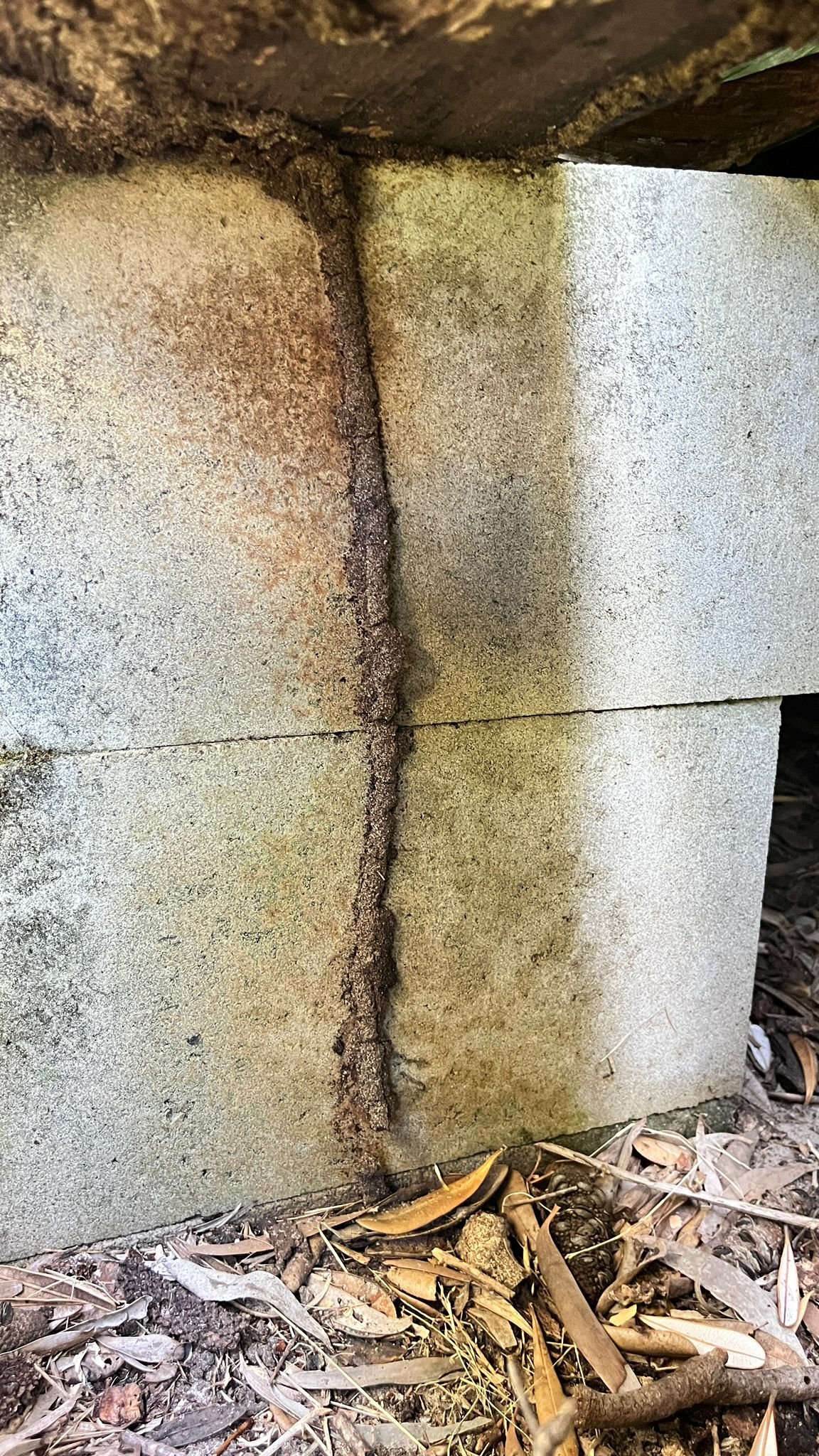
However, termites may still build visible shelter tubes over or around certain barriers.
This is why accessible inspection zones are important.
Similarly, a chemical treated zone can be affected by excavation or other disturbance.
The presence of a termite barrier doesn't eliminate the need to monitor the building for evidence of activity.
At Zone Pest, we encourage homeowners to understand where their protection is installed and what changes could affect it.
-
Homeowners often ask which termite protection system is best.
The answer depends on the building.
A newly constructed property may have physical termite management components incorporated into its design.
An established home may be suitable for a professionally installed chemical management system.
Another property may benefit from a professionally managed monitoring or baiting arrangement.
Some properties may use more than one approach.
Important considerations include:
Building Construction
Slab design, subfloor access, construction joints and service penetrations can influence available options.
Existing Protection
Previously installed systems should be identified and assessed before additional measures are considered.
Property Conditions
Moisture, drainage, landscaping and surrounding vegetation can influence termite risk.
Inspection Access
Accessible inspection areas support ongoing monitoring for termite activity.
Maintenance Requirements
Different systems have different ongoing responsibilities.
Professional Advice
A qualified termite management professional can assess the property and explain suitable options.
At Zone Pest, Matt's approach is to consider the individual property rather than recommend a single system for every home.
The best termite protection strategy is one that suits the building, addresses relevant risks and is supported by ongoing inspections and maintenance.
Chemical Termite Barriers Frequently Asked Questions
-
A chemical termite barrier is one of the methods used to help protect buildings against subterranean termite attack.
The term barrier can sometimes be misleading because it suggests a solid wall that termites cannot cross.
In reality, chemical termite management systems involve applying an appropriate registered termiticide to create treated zones in soil or other locations permitted by the product label.
Depending on the product, termites encountering a treated zone may be repelled, affected by the chemical or killed following exposure.
Some systems use non-repellent products that termites may contact without immediately detecting the treated area.
The aim is to manage termite movement through the protected locations and reduce the risk of concealed access to the building.
Chemical termite barriers may be considered for:
Established homes.
Certain new construction situations.
Properties with existing termite management arrangements.
Buildings requiring additional protection following assessment.
Properties where other methods may be difficult to install.
However, suitability depends on construction, site conditions, accessibility and the system design.
At Zone Pest, Matt considers the individual property before recommending a termite management approach.
-
Subterranean termites commonly move between their colony and food sources through soil, concealed pathways and protective shelter tubes.
A chemical termite management system is designed to address termite movement through particular areas around or beneath a building.
During professional installation, a registered termiticide is applied according to the product label and the property's termite management plan.
The treated zones may be positioned around foundations or other specified areas, depending on the construction and system.
Repellent Termiticides
Some products create treated areas that termites tend to avoid.
Their protective function depends on the continuity of the treated zone and the termites' response to it.
Non-Repellent Termiticides
Other products are designed so termites may enter treated areas without immediately detecting the chemical.
Exposure can affect the termites, and some products may allow transfer between individuals.
However, the extent and significance of any transfer depend on the particular product and conditions.
Why System Design Matters
A chemical treatment is only intended to manage termite movement through the areas included in the system.
Untreated gaps, inaccessible locations or later disturbance may create alternative access routes.
For this reason, professional design, correct installation and ongoing inspection are important.
-
Installing a chemical termite management system around an existing home requires careful assessment.
Unlike new construction, where some termite management measures can be incorporated during building work, established properties may have limited access to areas around or beneath the structure.
A professional assessment considers:
Building construction.
Foundation design.
Concrete paths and paving.
Soil conditions.
Drainage.
Plumbing and other services.
Existing termite protection.
Accessible and inaccessible areas.
Landscaping and nearby structures.
Previous termite activity.
Depending on the property and approved product, installation may involve treatment of accessible soil areas or other professional application methods.
Some installations may require work around concrete or paved surfaces to access locations specified in the termite management plan.
However, not every building can receive a continuous treated zone in every desired location.
Physical obstructions, construction features and inaccessible areas may affect the scope of the installation.
These limitations should be explained and documented.
At Zone Pest, Matt's approach is to assess the property and discuss what can realistically be achieved before recommending a termite protection system.
-
When homeowners hear the term termite barrier, they often imagine a continuous protective boundary around the home.
While this is a useful way to understand the concept, real buildings can make termite management more complicated.
Foundations, concrete paths, plumbing, extensions and other structural features may interrupt access to the areas where treatment is intended.
A chemical termite management system is designed around the building's construction and the locations that can be treated.
Potential challenges include:
Inaccessible soil.
Concrete structures.
Building extensions.
Service penetrations.
Changes in foundation levels.
Previously disturbed ground.
Landscaping alterations.
Areas affected by drainage or water movement.
If an intended treated zone is interrupted, termites may be able to exploit an untreated pathway.
However, the significance of a particular gap depends on the system design and the building.
This is why professional installation documentation is important.
Homeowners should understand which areas were treated, whether any locations were inaccessible and what ongoing precautions are recommended.
Regular termite inspections remain necessary because no chemical barrier guarantees complete protection.
-
One of the most common questions homeowners ask is how long their termite protection will last.
The answer depends on the particular system.
Chemical termiticides have different properties and registered uses.
Their performance can be influenced by:
The active ingredient and product formulation.
Approved application method.
Soil characteristics.
Moisture conditions.
Environmental exposure.
Disturbance of treated soil.
Building alterations.
Installation quality.
Product label requirements.
Some registered products have stated protection or service periods when installed under specified conditions.
However, these periods should not be treated as universal guarantees.
For example, excavation or plumbing work may disturb a treated zone before the end of its expected service period.
Likewise, an older treatment may no longer provide the level of protection originally intended.
-
Chemical termite management systems often rely on treated soil remaining in the intended locations.
This means changes around the property can affect protection.
Common examples include:
Installing garden beds.
Excavating beside foundations.
Replacing drainage.
Plumbing repairs.
Constructing paths.
Installing outdoor structures.
Removing or replacing soil.
Landscaping against external walls.
Building extensions.
Not every gardening activity will affect a termite barrier.
The concern is whether the work disturbs or bypasses an area included in the termite management system.
For example, excavation beside a foundation may remove treated soil.
Changes to soil levels may also create concealed access routes around particular building components.
This is why homeowners should retain installation plans and treatment records.
Before significant landscaping or building work, check whether termite protection could be affected.
Where a treated zone has been disturbed, professional reassessment may be required.
At Zone Pest, we encourage homeowners to consider termite protection during renovation planning rather than discovering potential problems after the work is complete.
-
There is an important difference between protecting a building and eliminating an entire termite colony.
Subterranean termite colonies may be located away from the structure they are attacking.
Workers can travel between the colony and food sources through soil and concealed pathways.
A chemical termite management system is designed to manage termites moving through specified treated areas.
Depending on the product, termites encountering those areas may be repelled or affected following exposure.
Some non-repellent termiticides can be transferred between termites, potentially affecting additional individuals.
However, the outcome depends on the product, termite species, exposure and other conditions.
It would be misleading to claim that every chemical barrier automatically eliminates the colony.
Protection Versus Active Treatment
If termites are already active in a building, the appropriate response may involve a specific treatment strategy.
That strategy may differ from installing a preventative termite management system.
This is why professional assessment is important before deciding what work is needed.
At Zone Pest, the focus is on understanding whether the objective is preventative protection, management of confirmed termite activity or a combination of both.
-
Yes. A chemical termite barrier does not replace professional termite inspections. Regular inspections help identify evidence of activity, damage, conducive conditions and changes that may affect existing termite protection.
Physical Termite Barriers Frequently Asked Questions
-
Physical termite barriers are one of the methods used to manage the risk of subterranean termite attack.
Unlike chemical termite management systems, which use registered termiticides, physical barriers rely on materials and construction details designed to restrict termite movement through particular areas.
Depending on the system, these may include:
Stainless steel mesh.
Specially graded stone barriers.
Approved termite-resistant sheeting or membranes.
Termite management components around service penetrations.
Construction details designed to expose potential termite entry routes.
Physical barriers are particularly relevant during new construction because they can be incorporated into the building before areas become inaccessible.
However, they don't necessarily stop termites from approaching a property.
Instead, they are designed to prevent concealed entry through protected locations or direct termite activity towards areas where it may be detected.
For example, termites may still construct shelter tubes over certain physical barriers.
This is why regular professional termite inspections remain important.
At Zone Pest, we encourage homeowners to understand what type of termite protection their building has and what areas the system is intended to protect.
Not Sure What Pest You’re Dealing With?
Finding pests around your home doesn't always mean there's a serious problem. But if you're noticing recurring activity, unusual damage or something you can't identify, it pays to understand what's happening.
At Zone Pest, Matt takes the time to identify the pest, assess the activity and explain the options.
Call Matt
Spiders Wasps & Other Common Insects Frequently Asked Questions
-
Living in Australia means sharing our environment with a wide variety of spiders.
They're part of our natural ecosystem, and many species are commonly encountered around homes, gardens, sheds and outdoor entertaining areas.
Spiders are predators that generally feed on insects and other small animals.
This means locations with suitable prey can also attract spiders.
Common places where spiders may be found include:
Around windows and door frames.
Beneath eaves and verandahs.
In gardens and vegetation.
Around outdoor lighting.
Inside garages and sheds.
Beneath outdoor furniture.
In sheltered cracks and crevices.
Different spider species have different habitat preferences.
Some construct webs to capture prey.
Others actively hunt.
Some prefer sheltered ground-level environments, while others are more commonly found in vegetation or elevated locations.
The presence of a spider doesn't automatically mean there's a pest problem.
However, some Australian spider species are medically significant and should be treated with appropriate caution.
If you're unsure what species you've found, avoid handling it and seek reliable identification.
At Zone Pest, we encourage homeowners to understand what they're seeing before deciding whether any action is necessary.
-
Spider webs around windows and outdoor lighting are a familiar sight for many homeowners.
These locations can be particularly useful for certain web-building species.
Outdoor lights may attract flying insects, creating feeding opportunities for spiders.
Windows, eaves, verandahs and building corners can also provide sheltered structures where webs can be anchored.
However, not all spiders build webs to catch prey.
Some spiders construct retreats or burrows.
Others actively hunt without using capture webs.
Even among web-building spiders, web shapes and locations vary considerably.
You may notice:
Orb-shaped webs between plants or structures.
Irregular webs in sheltered corners.
Sheet-like webs across vegetation.
Webs around outdoor lighting.
Silk retreats in cracks or crevices.
The presence of webs doesn't automatically indicate a dangerous spider.
Nor does the size of a web reliably indicate the danger posed by its occupant.
If webs are appearing repeatedly, it may be because the location continues to provide suitable shelter and insect prey.
-
Australia has a reputation for dangerous spiders, but it's important to keep that reputation in perspective.
The vast majority of spiders encountered around Australian homes do not present a serious medical threat to people.
Spiders are generally more interested in finding shelter and prey than interacting with humans.
However, some species require particular caution.
Funnel-web spiders and redback spiders are examples of medically significant Australian spiders.
Other species may bite when disturbed or handled, and reactions can vary.
The challenge is that spiders can sometimes be difficult to identify accurately.
Colour, size and general appearance aren't always reliable indicators of species or risk.
A large spider isn't necessarily more dangerous than a small one.
If you find an unfamiliar spider:
Avoid handling it.
Keep children and pets away.
Don't place your hands into concealed spaces where spiders may be sheltering.
Seek professional identification when necessary.
Obtain medical advice if a bite occurs.
For a suspected funnel-web or other potentially life-threatening spider bite, call Triple Zero (000), apply appropriate first aid and follow emergency medical instructions. Australian first-aid guidance differs by spider type, so don't assume the same technique applies to every bite.
Understanding spiders is much more useful than assuming every spider is dangerous.
-
Wasps are another group of insects that homeowners frequently encounter around buildings.
However, not all wasps behave in the same way.
Some species live in organised social colonies.
Others are solitary and construct individual nests or nesting chambers.
Social wasps may build nests in sheltered locations that offer protection from weather and disturbance.
Solitary wasps may use mud, soil, timber cavities or existing openings, depending on the species.
Potential nesting locations include:
Beneath eaves.
Around verandahs.
Inside roof spaces.
Under outdoor furniture.
In garden vegetation.
Around sheds.
Within suitable ground cavities.
The appearance and location of a nest can provide clues about the type of wasp involved, but identification should not rely on the nest alone.
Some wasps are valuable predators of other insects.
Others may become a safety concern when nests are established close to people, particularly where repeated disturbance is likely.
Avoid approaching, striking, spraying or attempting to dismantle an unidentified active wasp nest.
If a nest is close to a doorway, play area or frequently used outdoor space, seek appropriate professional advice.
-
Bees and wasps are sometimes confused because both can fly, may have yellow or dark markings, and some species can sting.
However, they aren't the same insects.
Bees are particularly important pollinators.
Many species collect pollen and nectar from flowers, helping plants reproduce.
Some bees live in colonies, while others are solitary.
Wasps are a diverse group with a wider variety of feeding behaviours.
Many wasps hunt other insects or use them as hosts for their developing young.
Adult wasps may also feed on nectar or other food sources.
Common differences can include:
Body Appearance
Many bees have relatively hairy bodies that assist with pollen collection.
Some wasps have smoother-looking bodies and a more pronounced narrow waist.
However, appearance varies, and these features aren't reliable enough for identifying every species.
Feeding Behaviour
Bees commonly collect pollen and nectar.
Many wasps hunt insects, scavenge or visit flowers.
Nesting Behaviour
Both groups include social and solitary species.
Ecological Role
Bees are important pollinators, while many wasps contribute to natural insect population control.
Both can provide valuable environmental benefits.
If bees establish a colony or swarm in an unsuitable location, seek advice from an experienced beekeeper or appropriate specialist rather than attempting to destroy or relocate them yourself.
-
If you've ever switched on an outdoor light and watched insects gather around it, you've probably wondered why it happens.
Artificial lighting can affect the behaviour of certain nocturnal insects.
Research indicates that some flying insects use natural light cues to help maintain their orientation.
Artificial lights can disrupt this behaviour, causing insects to circle, become disoriented or remain close to a light source.
Different insects respond differently depending on the species, light characteristics and surrounding conditions.
You may notice moths, beetles and other flying insects gathering around:
Porch lights.
Verandah lighting.
Outdoor entertaining areas.
Illuminated windows.
Garden lights.
Building entrances.
This activity can also attract predators.
Spiders may build webs nearby because flying insects provide feeding opportunities.
Other insect-eating animals may also take advantage of the concentration of prey.
This doesn't necessarily mean the flying insects are breeding inside the building.
They may simply be responding to the light.
Where insect activity around outdoor lighting is inconvenient, reviewing lighting placement and reducing unnecessary illumination may help.
-
Yes. Many spiders, wasps and predatory insects play important roles in natural ecosystems by feeding on other insects and helping regulate their populations. Their benefits should be considered alongside any genuine safety concerns.
Expanded Answer
It's easy to think of insects and spiders only in terms of whether we want them around our homes.
But many play valuable roles in the environment.
Spiders are predators that feed on a wide range of insects and other small animals.
Some wasps hunt caterpillars, flies, spiders or other prey.
Certain predatory beetles and other insects feed on organisms that may damage plants or become garden pests.
These relationships form part of the natural balance of ecosystems.
Examples of beneficial predators include:
Many spiders.
Ladybirds that feed on aphids.
Lacewing larvae.
Some predatory beetles.
Numerous solitary wasps.
Other insect-eating arthropods.
However, being beneficial doesn't automatically mean an animal is safe to handle or appropriate to leave in every location.
A medically significant spider inside a frequently used living area may warrant professional advice.
A defensive wasp colony beside a doorway may present an unacceptable risk.
The aim is to make informed decisions based on species, location, activity and risk.
Effective pest management doesn't mean eliminating every insect or spider around a property.
-
Most encounters with spiders, wasps and other insects don't require immediate pest treatment.
However, some situations deserve greater caution.
Examples include:
Potentially Dangerous Spiders
An unfamiliar spider found in a frequently used area may warrant identification, particularly if it resembles a medically significant species.
Active Wasp Nests
A nest near a doorway, children's play area or outdoor entertaining space can create a risk of accidental disturbance.
Repeated Indoor Activity
Frequent sightings may suggest suitable harbourage, access points or nesting activity nearby.
Children and Pets
Areas regularly used by children and pets may require additional consideration.
Known Sting Allergies
People with a history of severe allergic reactions may face greater risks from certain stinging insects.
Uncertain Identification
If you cannot confidently identify the species, avoid handling or disturbing it.
It's important not to assume that every spider, bee or wasp presents the same level of risk.
The species, location and circumstances all matter.
If someone experiences a severe allergic reaction, breathing difficulty, collapse or other signs of a medical emergency following a bite or sting, call Triple Zero (000).
For suspected dangerous spider bites, follow Australian first-aid guidance and seek urgent medical advice.
At Zone Pest, Matt's approach is to understand the activity and determine whether professional pest management is appropriate.
Rodents and Other Property Invaders Frequently Asked Questions
-
Rats and mice are adaptable animals that can live in a wide range of environments.
Although they're commonly associated with urban areas, rodents can also be found around suburban homes, rural properties, commercial buildings and natural environments.
When rodents enter buildings, they're generally responding to resources and conditions that support their survival.
These may include:
Accessible food and stored products.
Pet food and animal feed.
Water sources.
Protected nesting locations.
Suitable temperatures.
Openings that provide access to concealed spaces.
A roof void, for example, may provide a sheltered environment where rodents can move with relatively little disturbance.
Garages and sheds may offer similar opportunities, particularly where materials are stored for long periods.
However, the presence of rodents doesn't automatically mean a property is poorly maintained.
Even well-kept buildings can have openings or environmental conditions that allow rodents to enter.
At Zone Pest, understanding why rodents are using a particular property is an important part of investigating the activity.
-
Rats and mice are often grouped together when people talk about rodent problems, but they aren't identical.
Both are mammals belonging to the rodent order, characterised by continuously growing incisor teeth.
However, different species have distinct physical and behavioural characteristics.
Size
Adult rats are generally larger and more heavily built than adult house mice.
However, a young rat can sometimes be mistaken for a mouse.
Body Proportions
Differences in head shape, ears, tail proportions and feet can help with identification.
Behaviour
Some rats are particularly capable climbers, while others spend more time at ground level or in burrows.
House mice can exploit very small openings and often establish themselves close to accessible food and shelter.
Habitat
Depending on the species, rodents may occupy roof spaces, wall cavities, gardens, sheds, subfloors or other sheltered environments.
Evidence
Droppings, gnaw marks, tracks and movement patterns can provide clues, although they don't always allow a homeowner to identify the species confidently.
In Australia, common introduced pest rodents include the house mouse, roof rat and brown rat.
It's also important to recognise that Australia has native rodents, and not every small mammal encountered outdoors is an introduced pest.
Correct identification helps avoid inappropriate assumptions or responses.
-
One of the more surprising things about rodents is how effectively they can move around buildings.
Some species are strong climbers and may use trees, fences, pipes, walls or connected structures to reach roof areas.
Other rodents may enter closer to ground level and move through concealed building spaces.
Potential access points include:
Gaps beneath roofing materials.
Openings around eaves.
Damaged or poorly fitted vents.
Gaps around pipes and cables.
Openings beneath doors.
Damaged wall materials.
Unsealed service penetrations.
Structural openings around extensions or renovations.
Mice can squeeze through remarkably small gaps, while rats may exploit larger openings or enlarge vulnerable materials through gnawing.
However, finding a gap doesn't prove rodents are using it.
Look for supporting evidence such as droppings, gnawing, rub marks or repeated activity.
It's also important to avoid sealing a suspected entry point without understanding whether animals are currently inside. Trapping rodents within a building can create additional problems.
Professional investigation can help establish the likely access routes and an appropriate management approach.
-
Hearing scratching or movement above the ceiling can be unsettling, particularly late at night.
Rats and mice are possible causes because many rodents are especially active after dark.
Their movement through roof voids, along timbers or within concealed spaces can create noticeable sounds.
You might hear:
Scratching.
Scurrying.
Light tapping.
Gnawing.
Movement across ceiling materials.
However, these sounds don't automatically confirm rodents.
Other animals, including possums, may enter roof spaces in some circumstances.
Building movement, wind and other environmental factors can also produce noises.
The timing, location and type of sound may provide useful clues, but they aren't sufficient for reliable identification on their own.
Avoid entering roof spaces without appropriate safety precautions. Electrical hazards, unstable surfaces, insulation, wildlife and contamination can all present risks.
If noises are recurring, a professional investigation can help determine what's responsible.
Where native wildlife is involved, appropriate wildlife specialists may be required rather than conventional pest-control treatment.
-
Gnawing is a natural part of rodent behaviour.
Rats and mice have specialised front teeth called incisors that continue growing throughout their lives.
These teeth are adapted for biting and gnawing.
Rodents may chew a variety of materials, including:
Timber.
Plastic.
Cardboard.
Packaging.
Insulation.
Soft building materials.
Certain electrical cable coverings.
Not every material is being eaten.
Sometimes rodents are exploring, creating access, gathering nesting material or wearing down their teeth.
This behaviour can create genuine property concerns.
Damage to electrical wiring is particularly important because exposed or compromised wiring can create safety hazards, including electrical faults and potential fire risks.
If you discover suspected rodent damage to electrical materials, avoid touching the affected wiring and arrange assessment by a licensed electrician.
Gnaw marks can provide useful evidence of rodent activity, but they should be considered alongside other signs before determining the species responsible.
-
Rodents seek nesting locations that provide protection and suitable conditions for raising young.
Different species favour different environments.
Roof rats are capable climbers and may use elevated spaces such as roof voids and dense vegetation.
Brown rats are often associated with ground-level environments and may establish burrows.
House mice can nest in a wide variety of concealed spaces close to available resources.
Potential nesting locations include:
Roof spaces.
Wall cavities.
Stored boxes and belongings.
Garages and sheds.
Dense vegetation.
Subfloor spaces.
Protected areas beneath structures.
Burrows in suitable soil.
Areas containing unused materials.
Rodents may use shredded paper, insulation, fabric, vegetation and other soft materials to construct nests.
However, finding shredded material doesn't automatically prove rodents are responsible.
Additional evidence may include droppings, gnaw marks, tracks or repeated sightings.
If nesting activity is suspected, avoid disturbing potentially contaminated materials without suitable precautions.
Understanding the species and nesting location helps determine whether further investigation is necessary.
-
Rodents are highly adaptable when it comes to finding food.
Although people often associate mice with cheese, their feeding habits are much broader.
Depending on the species and environment, rats and mice may consume:
Grains and cereals.
Seeds.
Fruit.
Nuts.
Pet food.
Animal feed.
Food scraps.
Stored pantry products.
Other suitable organic materials.
Some rodents also consume insects and other animal-based foods.
Around residential properties, accessible food can be found in more places than homeowners realise.
Examples include pet feeding areas, poorly protected stored food, outdoor rubbish and animal feed kept in sheds.
However, food availability is only one factor supporting rodent activity.
Shelter, water, access and suitable nesting conditions also matter.
A property may experience rodents even when obvious food sources are limited.
Understanding their feeding habits helps explain why activity may occur around kitchens, garages, gardens and storage areas.
-
Rodents can remain concealed for long periods.
In many cases, homeowners notice evidence before seeing an actual rat or mouse.
Some of the more common signs include:
Droppings
Rodent droppings may be found along movement routes, near food sources or within concealed areas.
Their appearance can provide clues, but identification should not rely on droppings alone.
Gnaw Marks
Damage to packaging, timber, plastic or other materials may indicate rodent activity.
Nesting Materials
Shredded paper, insulation or fabric may be used in nesting areas.
Rub Marks
Rodents sometimes leave dark marks along frequently used routes.
Tracks
Footprints or tail marks may occasionally be visible in dusty or undisturbed areas.
Unusual Sounds
Repeated scratching or movement noises may suggest activity in concealed spaces.
Odours
Established activity can sometimes produce noticeable odours.
It's important not to assume every sound, mark or damaged item has been caused by rodents.
Also, rodent droppings and nesting materials can present contamination risks. Avoid dry sweeping or vacuuming suspected droppings, which may spread contaminated particles. Follow appropriate public-health cleaning guidance or seek professional assistance.
A combination of evidence and correct identification provides a more reliable picture.
-
Rodents can create problems beyond the inconvenience of seeing them around a property.
Their feeding, movement and nesting behaviour may affect food storage, building materials and hygiene.
Food Contamination
Rodents may contaminate food and preparation areas through droppings, urine or contact with contaminated surfaces.
Property Damage
Gnawing can damage packaging, stored belongings, insulation and some building materials.
Electrical Concerns
Damage to electrical cables can create potentially serious safety hazards.
Hygiene and Health
Rodents can carry organisms associated with disease, although the presence of a rodent doesn't automatically mean infection or illness will occur.
Nesting and Harbourage
Rodents may establish themselves in concealed spaces, creating contamination or damage that isn't immediately visible.
The appropriate response depends on the species, location and extent of activity.
Where suspected rodent contamination is present, avoid disturbing droppings or nesting material without appropriate precautions.
Where electrical damage is suspected, arrange assessment by a licensed electrician.
At Zone Pest, the focus is on understanding the activity and identifying the conditions that may be supporting it.
Something Around Your Property Doesn't Look Right?
You don't need to work out exactly what the problem is before calling.
Whether you've found suspected termites, recurring pest activity, unexplained timber damage or simply something you're unsure about,
Matt can help determine what should happen next.
Zone Pest provides practical pest and termite advice for homes and properties across the Northern Rivers and Tweed Coast.