

Pre-Purchase Building & Pest Inspections Frequently Asked Questions
Understanding Pre-Purchase Building & Pest Inspections
Buying a home or investment property is a major financial decision.
From the outside, a property may look well maintained. Fresh paint, renovated interiors and tidy landscaping can create a great first impression.
But the condition of a property isn't always obvious from a normal walkthrough.
Moisture problems may be developing beneath or behind accessible surfaces. Termite damage may have occurred previously. Building defects may require further investigation. Roof spaces and subfloors can reveal issues that simply aren't visible while walking through the living areas.
A pre-purchase building and pest inspection provides an independent assessment of the accessible areas of the property before you commit to buying.
The purpose isn't to find a perfect house.
It's to help you better understand what you're buying.
Understanding Pre-Purchase Building & Pest Inspections Frequently Asked Questions
-
A pre-purchase building and pest inspection helps you better understand the condition of a property before making a major financial commitment.
The building component looks for visible evidence of defects and other concerns within the accessible areas covered by the inspection.
The pest component focuses particularly on timber pests, including evidence of:
Active termites
Previous termite activity
Termite damage
Other relevant timber pests
Moisture
Conditions conducive to termite attack
Evidence of previous termite management
The findings are documented in an inspection report, along with relevant limitations and recommendations.
The purpose isn't to determine whether you should or shouldn't buy the property.
It's to give you additional information so you can make a more informed purchasing decision.
-
A pre-purchase inspection can provide valuable information about defects, termite activity, damage and other concerns that may not be obvious during an ordinary property viewing. Whether you proceed without one is ultimately your decision and should form part of your wider property due diligence.
-
A pre-purchase building and pest inspection should generally be arranged at a point in the purchasing process where you still have an opportunity to consider the findings. The appropriate timing can depend on the sale method and your contract, so confirm important deadlines with your solicitor or conveyancer.
-
The buyer commonly arranges their own pre-purchase building and pest inspection, although the exact process can vary. Organising your own inspection gives you a direct relationship with the inspector carrying out the assessment for you.
-
A pre-purchase inspection is part of the buyer's property due diligence.
When you engage Zone Pest to inspect a property you're considering purchasing, you're commissioning the inspection and report for your benefit.
That gives you a direct relationship with the inspector and the opportunity to ask questions about the findings.
The cost of the inspection should be considered in the context of the much larger financial decision being made.
If significant defects, termite activity or another concern is identified, the inspection may provide information you would otherwise not have had before proceeding.
Even when the inspection identifies no major concerns within the areas inspected, the information can still help you better understand the property and any limitations identified.
-
A pre-purchase inspection is being performed to help inform your property decision.
Choosing your own inspector means you can consider factors such as:
Experience
Qualifications and licensing where applicable
Inspection approach
Local knowledge
Reporting process
Inspection technology
Whether you can speak with the inspector afterwards
It also establishes a direct relationship.
If something in the report concerns you, you can ask the inspector who actually assessed the property to explain what was observed and why a recommendation was made.
The cheapest inspection isn't necessarily the most useful.
What matters is receiving a thorough assessment, a clear report and practical explanations of significant findings and limitations.
-
A report supplied by the seller or agent may provide useful information, but you should understand who commissioned it, when the inspection occurred, its scope and limitations, and whether you're entitled to rely on it. Consider obtaining your own independent inspection if you need advice directly for your purchase.
-
A newer property isn't automatically free from defects, moisture issues or termite risk. Buyers may still choose to arrange an independent inspection to better understand the property's condition before purchase.
-
Units, apartments and townhouses can still have building defects, moisture problems and pest issues.
However, ownership structures can make the due-diligence process different.
An inspection may assess accessible areas relevant to the individual property, while other building components may form part of common property.
Depending on the development, buyers may also need to investigate:
Strata records
Previous building problems
Maintenance history
Common property
Waterproofing issues
Termite management
Previous repairs
Planned works
A pre-purchase inspection therefore shouldn't necessarily be viewed as a replacement for strata or legal due diligence.
Instead, it can form one part of the broader process of understanding what you're purchasing.
What Does The Building Inspection Cover Frequently Asked Questions
-
The building inspection is designed to provide a general assessment of the condition of the accessible building elements at the time of inspection.
Depending on the property and accessibility, the inspector may assess areas such as:
Interior rooms
Floors, walls and ceilings
Doors and windows
Wet areas
External walls
Roof exterior
Roof space
Subfloor
Decks, balconies and verandahs
Garages, carports and other relevant structures
Visible drainage or moisture-related concerns
The inspector is looking for evidence of defects or conditions that may warrant attention or further investigation.
It is important to understand that a pre-purchase building inspection is not the same as dismantling or testing every component of the property.
The inspection is primarily based on the condition of the building elements that can reasonably and safely be accessed and assessed.
-
An inspector may identify visible evidence that raises concerns about the structure or movement of a building.
This might include observations such as:
Significant cracking
Movement or distortion
Uneven building elements
Deteriorated structural timber
Problems affecting supports
Other visible conditions requiring investigation
However, a standard pre-purchase inspection isn't a structural engineering assessment.
If a finding appears significant or its cause cannot be confidently determined within the scope of the inspection, the report may recommend further assessment by a structural engineer or another appropriately qualified specialist.
-
Yes. Visible cracking can form part of a pre-purchase building inspection. The inspector considers the location, extent and characteristics of accessible cracking and may recommend further investigation where appropriate.
-
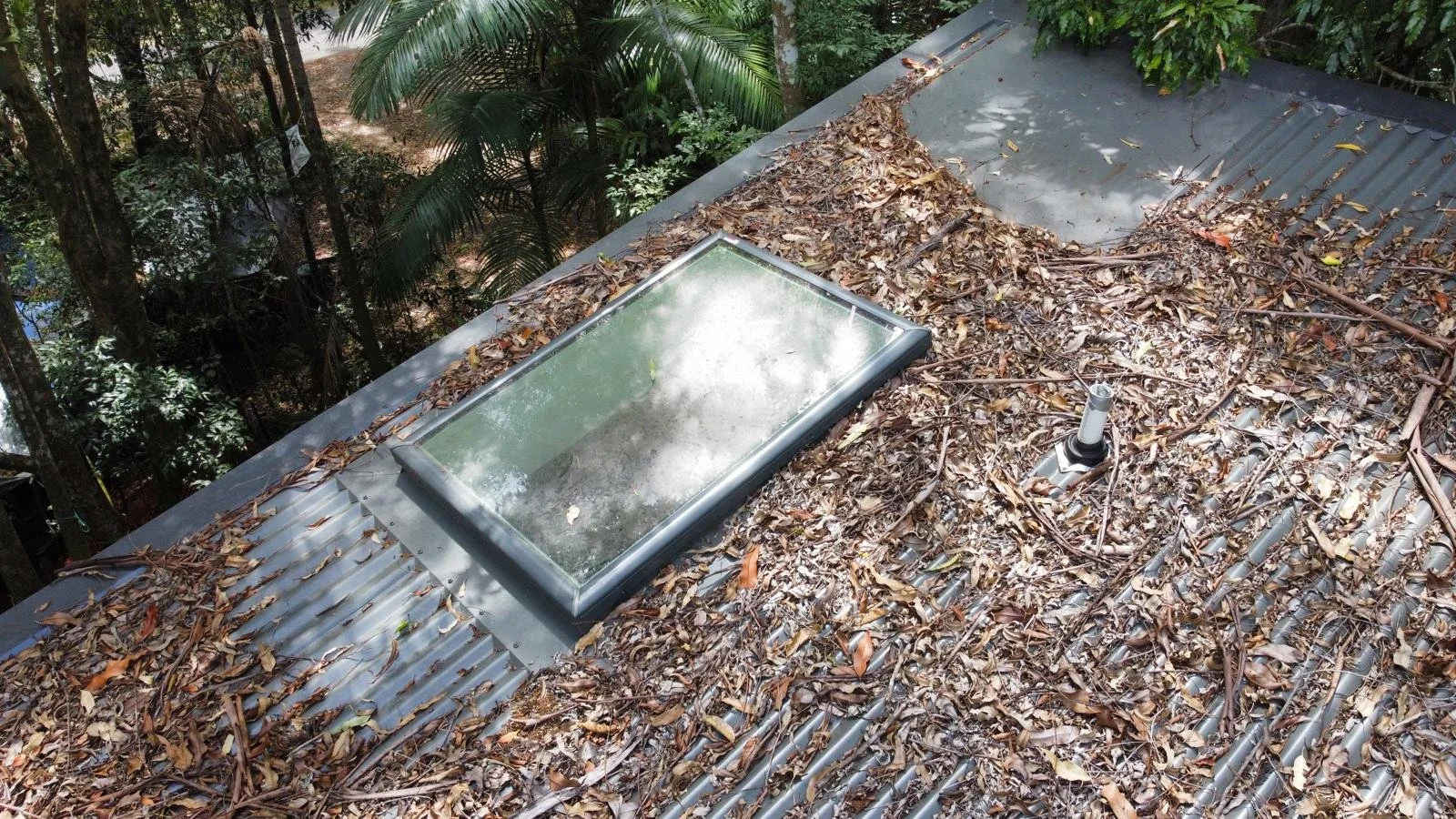
Accessible roof areas can form part of a pre-purchase inspection. What can be inspected depends on the property's design, access, height, weather, safety and other site conditions.
-
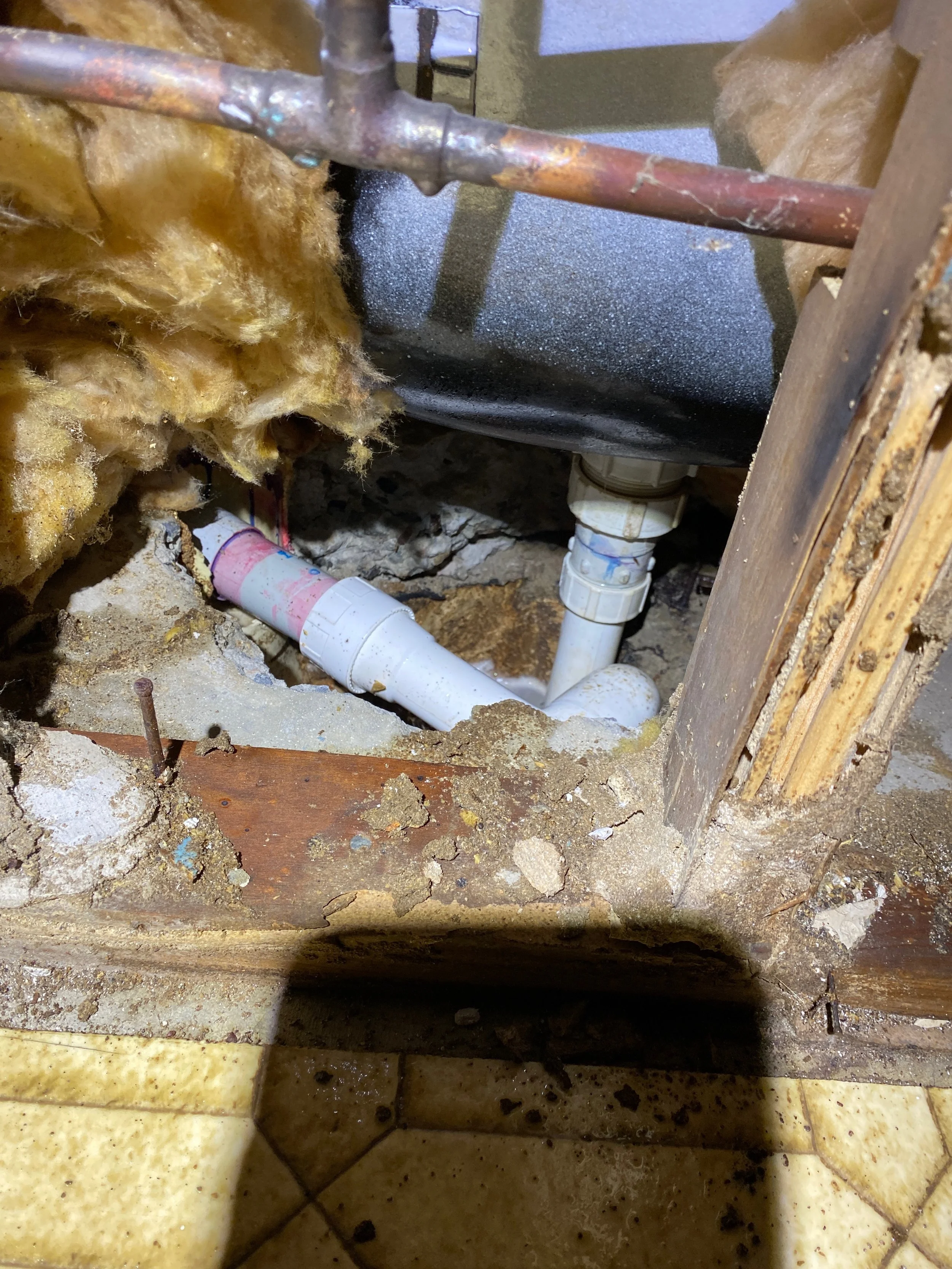
Visible signs of moisture and other evidence suggesting a moisture problem can form part of a pre-purchase inspection. Moisture-detection equipment may also assist with investigating areas of concern.
-
Visible drainage conditions around accessible areas of the property may be considered where they are relevant to the building inspection, particularly where there is evidence of moisture or water accumulating near the structure.
-
Where a roof space is safely and reasonably accessible, it may form an important part of the inspection. Access can be restricted by the building design, clearance, insulation, services or safety conditions.
-
Where the property has a safely accessible subfloor, it can form an important part of the building and pest inspection. Low clearance, stored materials, moisture or other hazards can sometimes restrict access.
-
A property can include considerably more than the main residence.
Depending on the property and agreed inspection scope, relevant structures may include:
Attached garages
Detached garages
Carports
Decks
Verandahs
Balconies
Sheds
Pergolas
Other associated structures
These areas can have their own building and timber-pest concerns.
What the Pest & Termite Inspection Covers Frequently Asked Questions
-
Termites are an important part of the pest component of a pre-purchase inspection.
The inspector isn't simply looking for live termites.
They may also look for evidence such as:
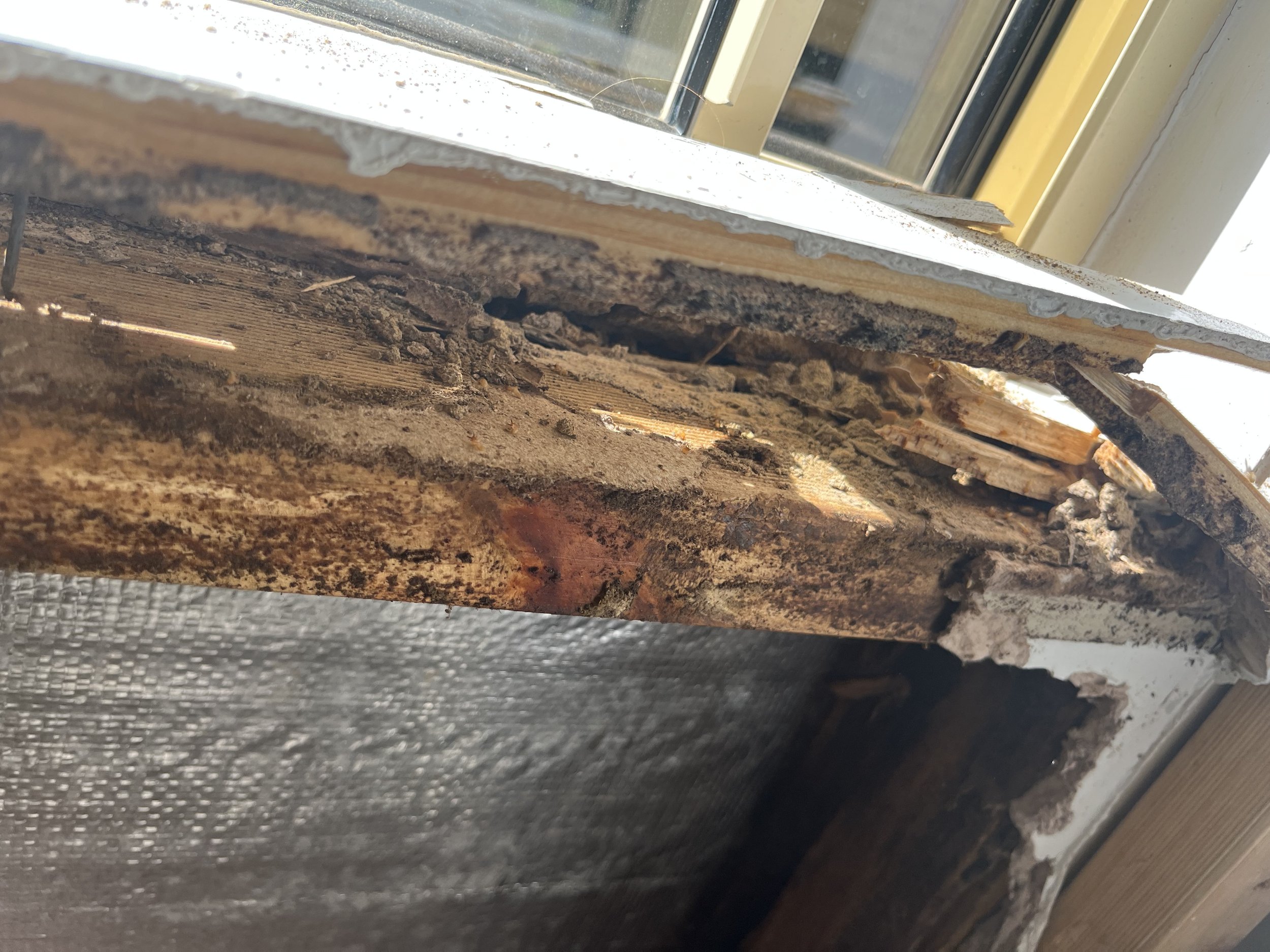
Active termite workings
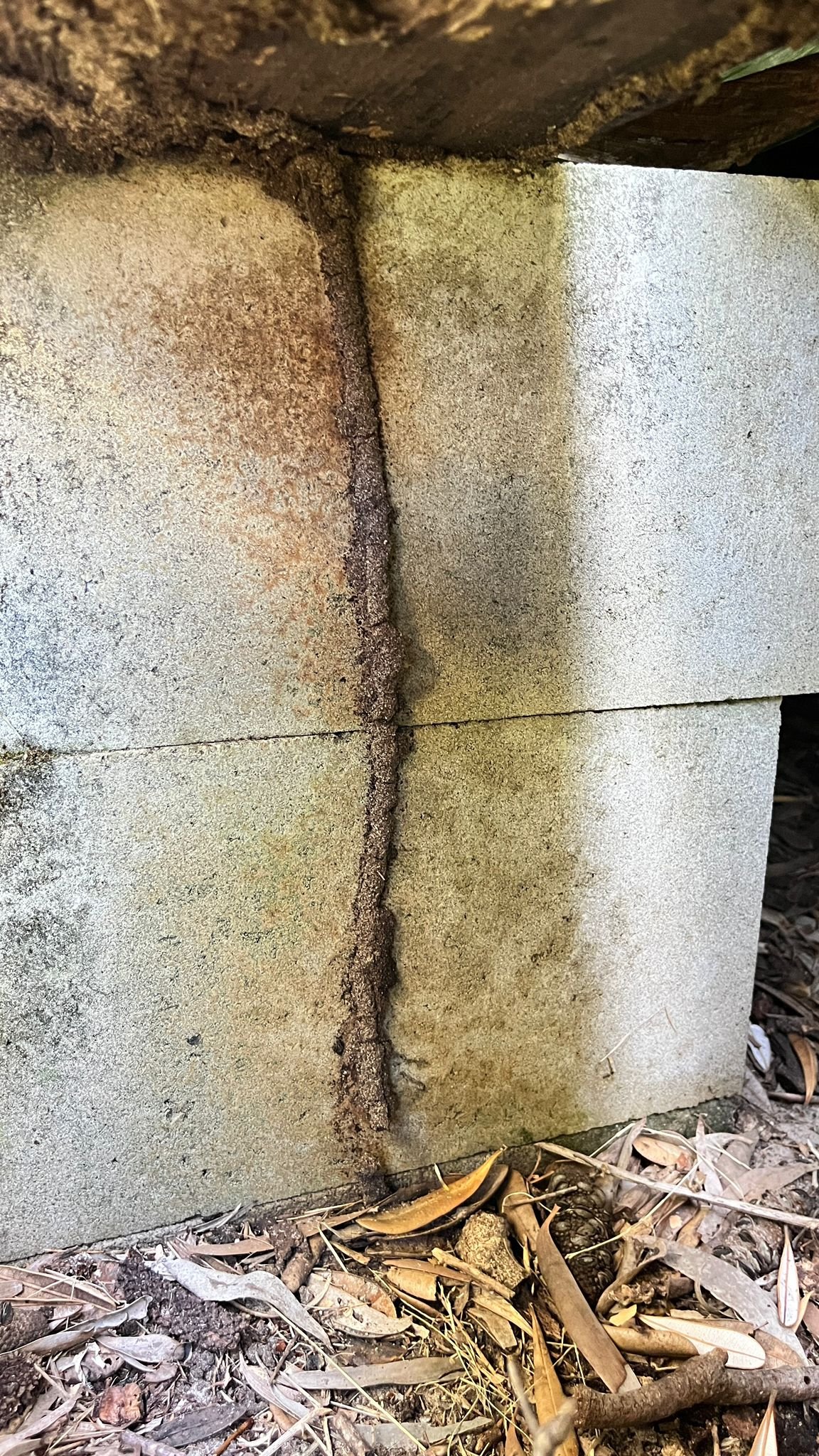
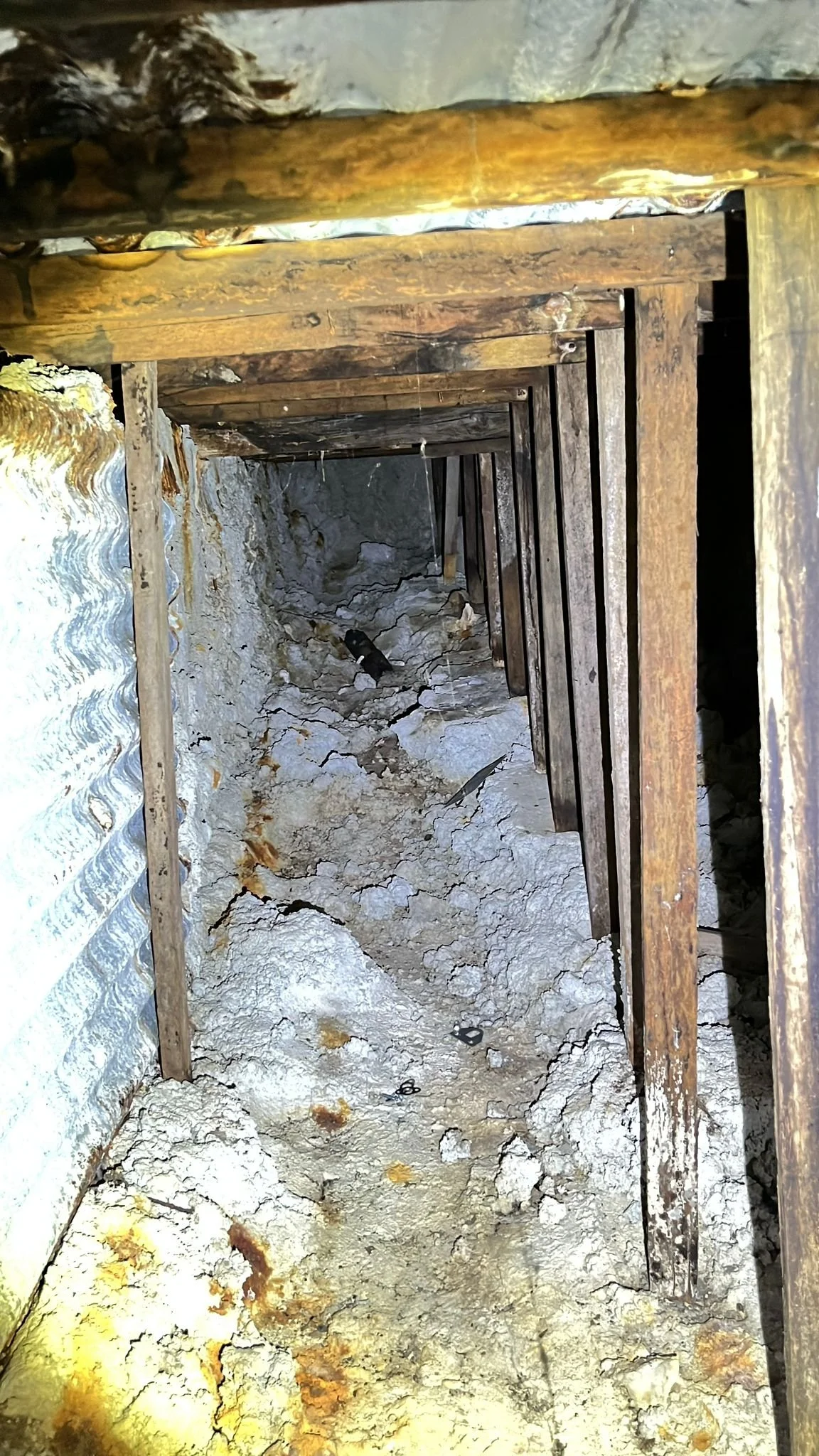
Mud leads or shelter tubes
Damaged timber
Evidence of previous termite activity
Moisture
Timber-to-ground contact
Conditions conducive to termite attack
Evidence of previous termite treatment
Existing termite management systems
Areas where inspection is restricted
This distinction matters because a property can have no active termites detected during the inspection while still having evidence of previous termite damage or conditions that increase future termite risk.
Where evidence requires further investigation, the inspector may recommend additional assessment.
-
Termite inspection involves much more than simply trying to find live termites.
Depending on the property and accessible areas, the inspector may look for:
Live termites
Termite workings
Mud leads or shelter tubes
Damaged or hollowed timber
Previous termite damage
Changes in timber condition
Moisture
Timber contacting soil
Restricted inspection zones
Evidence of previous treatment
Termite barriers or baiting systems
Building and environmental conditions favourable to termites
Individual findings need to be considered together.
For example, moisture doesn't prove termites are present.
Likewise, damaged timber doesn't automatically establish that termites are currently active.
The inspector considers the available evidence to develop a broader understanding of the property's termite condition and risk.
-
If active termites are identified, the finding should be documented and appropriate further investigation or professional termite management may be recommended. Buyers should understand the extent of the known activity and any associated damage before deciding how to proceed.
-
Previous termite damage means termites have affected the property at some point, but it doesn't necessarily mean termites are currently active. The extent of damage, evidence of previous treatment and current termite risk may require further investigation.
-
No. Not finding active termites during an inspection means no active termites were detected within the areas and conditions inspected at that time. It isn't a guarantee that termites aren't present in concealed or inaccessible areas or that the property won't experience future termite activity.
-
Visible evidence of previous termite treatment or termite management systems may be noted during an inspection, but the inspector may not always be able to determine exactly what treatment was performed, when it was completed or its current effectiveness without supporting documentation.
-
Visible termite barriers, monitoring systems or bait stations may be identified during an inspection, but determining their condition, installation details or ongoing effectiveness may require records or a separate assessment of the termite management system.
-
A termite inspection isn't only about asking:
"Are termites here today?"
It also considers:
"Are there conditions around this property that may increase termite risk?"
Examples can include:
Persistent moisture
Poor drainage
Leaking plumbing
Timber contacting soil
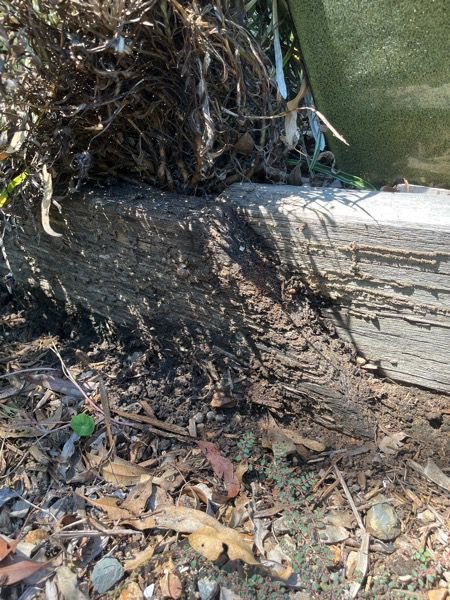
Garden beds built against the structure
Stored timber near the building
Dense vegetation
Restricted inspection zones
Poor subfloor ventilation
Building alterations that conceal termite entry points
A conducive condition doesn't mean termites are definitely present.
It means there is a condition that may make termite activity more likely, provide favourable conditions or make future detection more difficult.
Identifying and correcting these conditions can form an important part of ongoing termite management.
-
Moisture is an important clue during both building and pest inspections.
Possible sources include:
Plumbing leaks
Roof leaks
Waterproofing problems
Poor drainage
Condensation
Inadequate subfloor ventilation
Water accumulating around the building
Moist conditions can contribute to environments that are favourable to termite activity.
This is why an inspector may use moisture-detection equipment when assessing suspicious areas.
However:
A high moisture reading is not a termite detector.
It tells the inspector that moisture may be present.
That information is then considered alongside other evidence, such as timber condition, termite workings, thermal anomalies and the construction of the property.
Depending on the findings, further investigation of the moisture source may also be recommended.
-
The pest component of a pre-purchase building and pest inspection primarily focuses on timber pests within the agreed inspection scope. Evidence of other pest activity may sometimes be observed, but a pre-purchase timber pest inspection shouldn't be assumed to be a complete general pest-control inspection.
Inspection Technology & Limitations Frequently Asked Questions
-
Professional inspection technology can provide useful additional information when assessing a property.
Depending on the circumstances, Zone Pest may use tools such as:
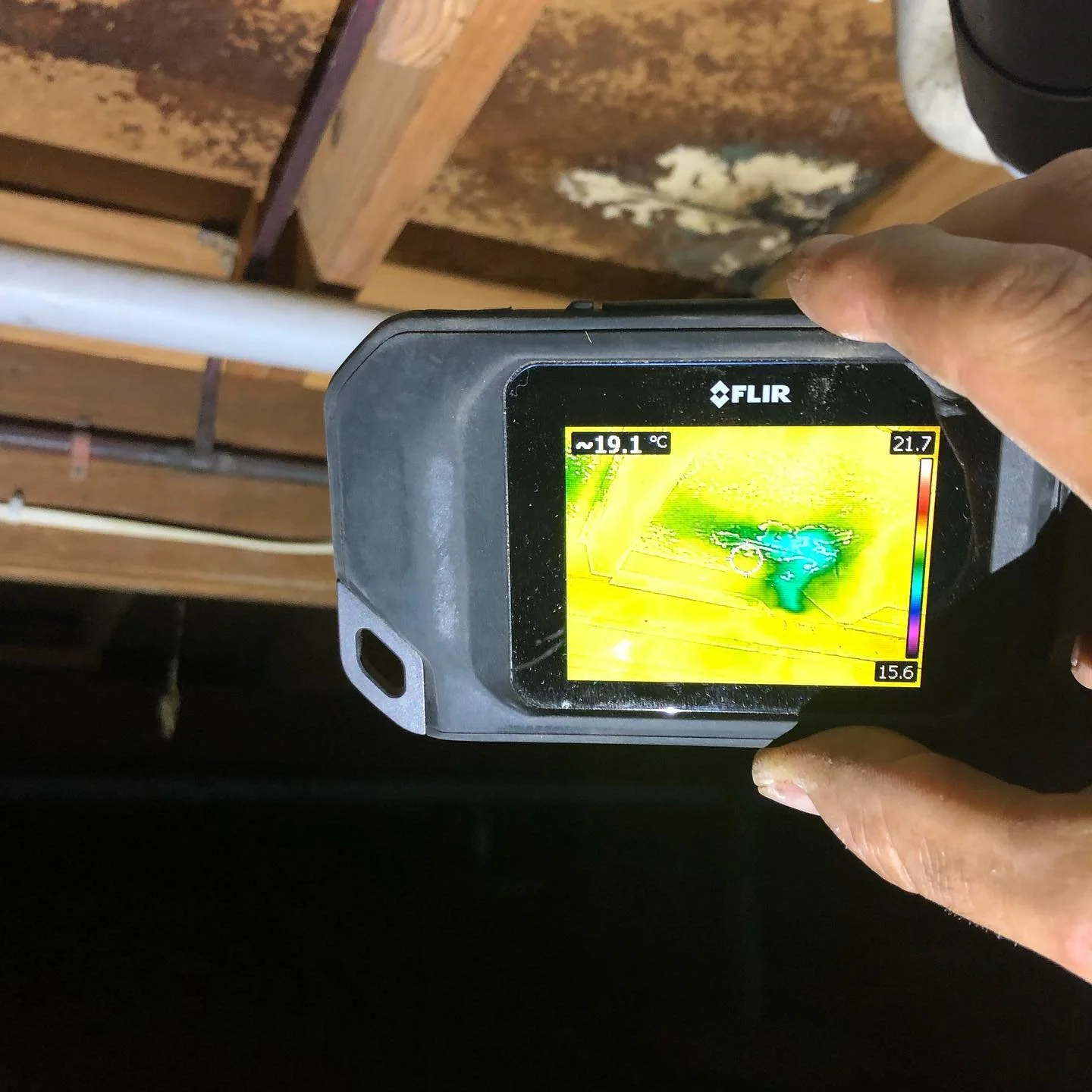
Thermal imaging
Moisture-detection equipment
Termatrac termite-detection technology
Other appropriate inspection equipment
Different tools perform different jobs.
A thermal camera may help identify temperature variations.
A moisture meter may help identify areas with elevated moisture.
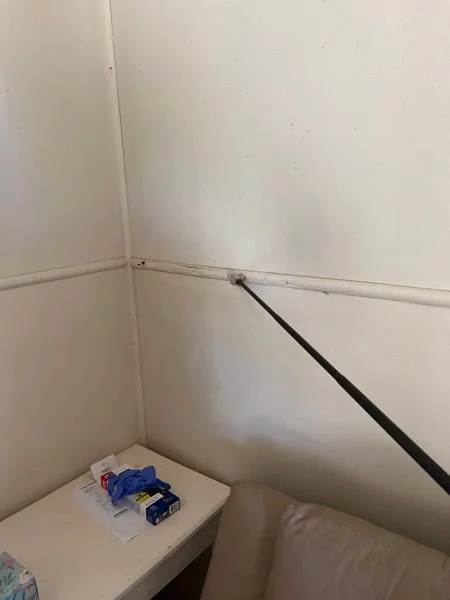
Termatrac can assist with investigating suspected termite activity without immediately opening up the building surface.
However, none of these tools should be considered a replacement for a thorough inspection.
The inspector still needs to consider:
Construction
Visible evidence
Timber condition
Moisture
Termite risk factors
Building defects
Access limitations
The relationship between different findings
The equipment provides additional information.
The inspector interprets what that information means in the context of the property.
-
Thermal imaging detects differences in surface temperature that may help an inspector identify areas requiring closer investigation. A thermal anomaly doesn't automatically mean termites, moisture or a building defect is present.
-
No. A thermal camera doesn't see termites through walls. It detects surface-temperature differences that may sometimes indicate an area worth investigating further.
-
Moisture can provide an important clue during both building and timber-pest inspections.
A moisture meter can help an inspector investigate areas where moisture may not be immediately obvious from visual inspection alone.
Elevated moisture may be associated with issues such as:
Plumbing leaks
Roof leaks
Waterproofing problems
Poor drainage
Condensation
Subfloor moisture
Other water-entry problems
Moisture is also relevant to termite risk because termites are often associated with environments where moisture is available.
However:
A moisture meter detects moisture — not termites.
When an elevated reading is found, the inspector considers it alongside other evidence and may recommend further investigation to determine the source.
-
Termatrac is designed specifically to assist with termite investigations.
When other inspection findings create concern about a particular area, Termatrac technology can help investigate possible termite movement behind some building surfaces.
This can be useful because termites frequently operate in concealed locations.
For example, an inspector might first identify:
Suspicious timber
A moisture anomaly
A thermal anomaly
Termite workings
Other evidence suggesting concealed activity
Termatrac can then provide another source of information when investigating the area.
However, like every inspection tool, it has limitations.
Construction materials, depth, environmental conditions and the nature of the suspected activity can influence what the equipment can detect.
Termatrac therefore forms part of the investigation rather than acting as a guarantee that every concealed termite will be found.
-
Modern inspection technology is extremely useful.
But the equipment doesn't understand the property.
A thermal camera can display temperature differences.
A moisture meter can indicate moisture.
Termatrac can assist with investigating suspected movement.
The inspector still needs to ask:
Why is this reading different?
Is it normal for this part of the building?
Could plumbing explain it?
Could sunlight or insulation explain it?
Is there visible termite evidence nearby?
Is the timber damaged?
Are there conducive conditions?
Does another inspection method support the finding?
That's where professional judgement becomes important.
One reading or image rarely tells the entire story.
The strongest inspection approach combines:
Visual inspection + appropriate technology + building knowledge + termite knowledge + experience + professional judgement.
Technology helps Matt investigate more thoroughly.
It doesn't replace Matt.
The Inspection Day Frequently Asked Questions
-
A pre-purchase inspection is a systematic assessment rather than simply a quick walk around the property.
Depending on the property, scope and accessibility, the inspection may include areas such as:
Interior rooms
Wet areas
Exterior walls
Roof exterior
Roof space
Subfloor
Garages and associated structures
Decks, verandahs and other accessible areas
Areas showing evidence of moisture
Areas presenting potential termite risk
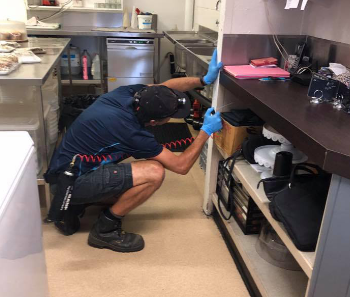
Matt will look for evidence relating to the timber-pest components of the inspection. Matt works closely with a licensed building inspector for the building inspection component of the process.
Where appropriate, inspection equipment such as thermal imaging, moisture detection or Termatrac may be used to investigate particular areas more closely.
Relevant findings, limitations and recommendations are then documented in the inspection report.
-
Inspection time varies depending on the size, age, construction, condition and accessibility of the property. A thorough inspection shouldn't be rushed simply to meet a fixed timeframe.
-
Where practical and permitted, attending at least part of the inspection can be useful because the inspector may be able to show you significant findings and explain them in the context of the property.
-
Yes. Occupied properties can generally be inspected, although furniture, belongings and normal household contents may restrict access to some building surfaces or areas.
-
Yes, provided appropriate access has been arranged in accordance with the relevant tenancy and property-access requirements. The presence of tenants doesn't automatically prevent an inspection.
-
A pre-purchase inspection becomes most useful when it's treated as part of your overall due-diligence process rather than simply a box to tick before buying.
Before the inspection:
Arrange it with enough time to consider the findings.
Tell Matt about anything that has already concerned you.
Mention important additional structures.
Ask for appropriate access to be available.
Advise Zone Pest if you know particular areas may be restricted.
During the inspection, where attendance is practical:
Give Matt space to inspect systematically.
Take note of significant findings he shows you.
Ask questions when appropriate.
After the inspection:
Read the complete report.
Pay attention to access limitations.
Don't focus only on photographs.
Ask for clarification if something is unclear.
Follow recommendations for further investigation where appropriate.
Obtain specialist advice where required.
Most importantly, don't look at the report simply as:
"Did the house pass or fail?"
A pre-purchase inspection isn't normally a pass-or-fail exercise.
It's about understanding:
What was found?
What couldn't be inspected?
What deserves further investigation?
What information should I consider before deciding whether to proceed?
That's how the inspection becomes genuinely useful in the buying process.
-
The report is the formal record of what was observed during the inspection.
Depending on the property, scope and findings, it may contain information relating to:
Building defects
Areas of deterioration
Moisture-related concerns
Active termite evidence
Previous termite activity or damage
Other relevant timber-pest findings
Conditions conducive to termite activity
Accessible roof-space findings
Accessible subfloor findings
External building conditions
Relevant photographs
Areas that couldn't be adequately inspected
Recommendations for further investigation
A good report should help you understand not only what was found, but also where uncertainty remains.
It's important to read the complete report rather than looking only at the summary or photographs.
The context surrounding a finding can be just as important as the finding itself.
-
Not every defect identified during a pre-purchase inspection carries the same level of importance.
A major defect generally deserves particular attention because of its potential significance to the building or the work that may be required.
Depending on the circumstances, examples might involve concerns associated with:
Structural building elements
Significant deterioration
Substantial water entry
Serious timber damage
Important building movement
Other conditions requiring significant repair or investigation
However, buyers shouldn't attempt to diagnose the severity of an issue simply from a photograph or a few words in the report.
Where appropriate, further assessment may be recommended by a:
Structural engineer
Builder
Roofer
Plumber
Waterproofing specialist
Other appropriately qualified professional
The important question isn't simply:
“Is this labelled a major defect?”
It is:
“What does this finding mean for this particular property, and what should I investigate next?”
-
Established properties commonly have minor defects.
These can result from:
Age
Normal wear
Weather exposure
Previous maintenance
Material deterioration
Minor movement
General property use
A long list of minor defects doesn't automatically mean the property is in poor condition.
Likewise, the word minor doesn't necessarily mean an issue should be ignored forever.
Some minor defects may require normal maintenance, while others could deteriorate if left unattended.
The report helps distinguish these findings from more significant concerns.
For buyers, the goal is to understand the overall condition of the property rather than becoming overwhelmed by every individual maintenance item.
-
This distinction is particularly important for property buyers.
A report may identify:
Evidence of termite damage
without identifying:
Active termites at the time of inspection.
That doesn't make the damage irrelevant.
Questions that may need to be considered include:
How extensive is the visible damage?
Could additional damage be concealed?
Does the damaged timber require repair?
Could structural elements be affected?
Is there evidence of previous termite treatment?
Are treatment records available?
Does the property have ongoing termite protection?
Are conducive conditions still present?
Depending on the extent and location of the damage, further assessment by a builder, structural engineer or termite professional may be appropriate.
And remember:
No active termites detected at the time of inspection isn't a guarantee that concealed termite activity doesn't exist.
-
This is one of the most important parts of a pre-purchase report — and one buyers can easily overlook.
Imagine the report says:
No visible termite activity identified in the inspected subfloor.
That's very different from:
The subfloor couldn't be accessed.
In the second situation, the inspector has less information.
Common limitations can include:
Inaccessible roof areas
Inaccessible subfloors
Furniture
Stored possessions
Fixed cabinetry
Floor coverings
Insulation
Locked rooms
Dense vegetation
Unsafe access
Concealed construction
A limitation doesn't prove there is a defect or termite problem behind the obstruction.
But it does mean the area shouldn't simply be treated as having been cleared.
Where a significant area can't be inspected, Matt may recommend access or further investigation where appropriate.
-
Yes. If something in your Zone Pest inspection report is unclear, speaking with Matt can help you understand the finding, its context, the inspection limitations and any recommended next steps.
Buying a Property in the Northern Rivers or Tweed Coast?
A pre-purchase building and pest inspection can help you better understand the condition of the property before you make your decision.
Zone Pest can assess the accessible areas of the property for relevant building defects, termite activity,
timber pest damage and conditions that may require further investigation.
If you're already considering a property, contact Zone Pest with the property details and any important purchasing deadlines.